
Key Takeaways
- The long-standing brand vs. demand debate is becoming strategically irrelevant
- Marketing is increasingly judged by market position, not internal metrics
- The most valuable marketing strategies shape how markets think, not just how buyers convert
For most of the last two decades, marketing strategy has been defined by a single, persistent tension: brand versus demand.
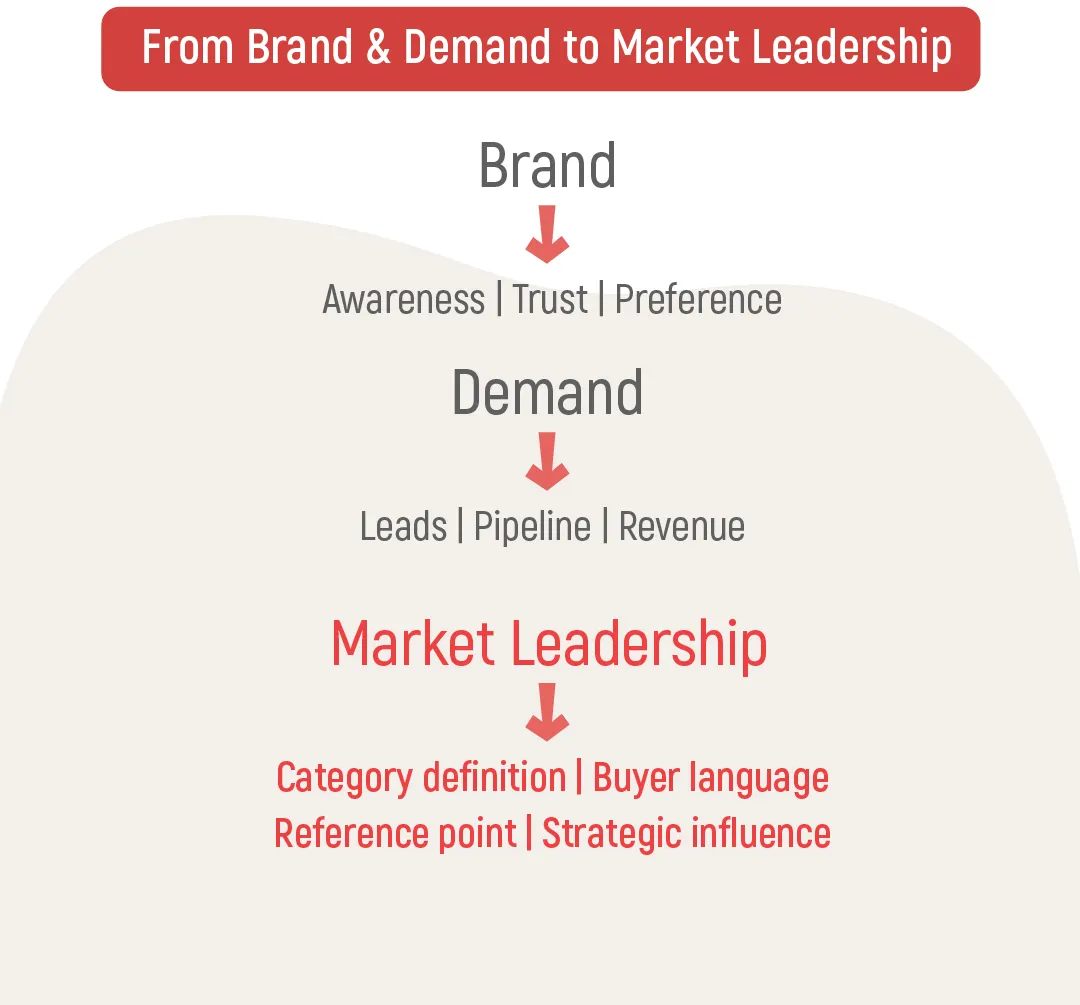
Brand represented the long game, awareness, trust, reputation, and preference. Its value accumulated over time and was often measured indirectly through recall, favorability, or share of voice.
Demand, by contrast, promised immediacy and proof. Leads, pipeline, revenue attribution. It aligned neatly with quarterly expectations and executive dashboards, offering a clearer line of sight between marketing activity and business results.
That distinction shaped budgets, teams, agencies, and even how CMOs earned credibility at the executive table. For a long time, the framework made sense. Markets were less crowded. Buyer journeys were more linear. It was possible…at least in theory…to separate awareness from action.
Over time, however, the debate hardened into doctrine. Marketing leaders were asked to choose sides or justify the balance. Strategy conversations became allocation arguments. And success was framed as finding the perfect equilibrium.
What’s striking now isn’t that one side finally won. It’s that the question itself is quietly disappearing from executive conversations.
Not because brand and demand no longer matter, but because leaders are asking something more fundamental: Are we leading our market, or are we simply participating in it?
The Debate That No Longer Maps to Reality
Research from Gartner shows that B2B buyers are often 70% or more through their decision-making process before engaging directly with a company, yet many still struggle to articulate meaningful differences between providers. That tension is telling. Decisions are happening early, but distinction is happening late, or not at all.
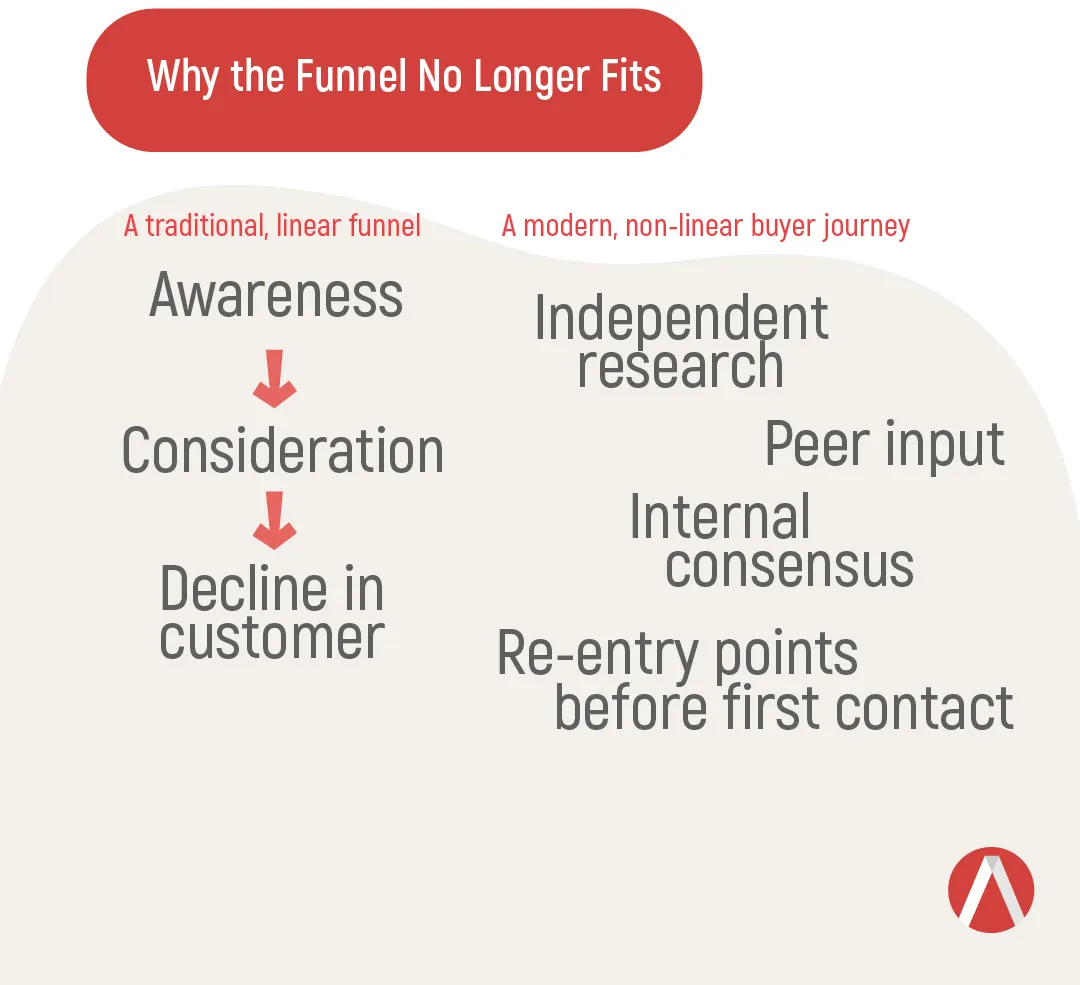
In this environment, debating brand versus demand misses the point. Both are inputs. Neither, on its own, creates leadership.
What Executives Are Really Watching
In boardrooms, I see far less interest in how marketing dollars are split…and far more curiosity about outcomes that are harder to chart on a dashboard.
Are we becoming the reference point in our category? Do customers describe the problem in our language? When the market shifts, do people look to us, or wait to see what we do next?
These aren’t branding questions. They aren’t demand questions either. They’re market leadership questions.
The Aha! moment for many leadership teams is realizing that marketing isn’t just amplifying strategy anymore, it’s actively shaping the terrain the business competes on.
When Marketing Stops Supporting the Business and Starts Defining It
I’ve seen organizations with strong campaigns, efficient pipelines, and healthy metrics still struggle to stand out strategically. And I’ve seen others where marketing plays a very different role.
In those organizations, marketing:
- Establishes the narrative customers use to frame decisions
- Signals what matters, and what doesn’t, in the category
- Helps the company choose where not to compete
The difference isn’t budget or creativity. It’s ambition. Marketing leaders in these organizations aren’t asked, “How will this perform?” They’re asked, “How will this move the market?” That’s a fundamentally different standard, and one that’s becoming more common in 2026.
Why This Shift Is Accelerating Now
Three forces are pushing marketing strategy toward market leadership:
First, crowded categories, where incremental differentiation no longer registers.
Second, longer, more complex buying cycles, where clarity matters more than cleverness.
Third, executive pressure for durable advantage, not short-term wins.
In this environment, marketing that only responds (optimizing channels, improving conversion, increasing efficiency) struggles to create separation. Market leaders, by contrast, use marketing to frame the conversation before buyers enter it.
The New Question Marketing Leaders Must Answer
The most important question for marketing in 2026 isn’t whether brand or demand is working.
It’s this: Is marketing helping define how the market thinks, or just how it buys?
When marketing owns market leadership, the old debates fade. Brand becomes the foundation. Demand becomes the outcome. And strategy moves upstream, where it belongs.
Questions to Ask Yourself
- How is marketing influencing our market position, not just our metrics?
- If customers described our category today, would our point of view show up?
- What would change if marketing were accountable for market leadership, not just performance?
In 2026, marketing strategy will be measured less by internal alignment and more by external influence. If marketing isn’t helping lead the market, it’s time to raise the ambition and rethink the role it plays at the table.