

By Lori Jones, President & CEO, Avocet Communications
Key Takeaways
- Differentiation is no longer enough. Most brands are swimming in the same ocean, with the same messages, using the same tools.
- Category creation…big or micro…is becoming the new growth engine. The brands making the biggest leaps aren’t competing… they’re redefining the game.
- Insights, not product features, spark category creation. The best categories are built from a sharp understanding of unmet needs or unseen opportunities.
- You don’t need a Super Bowl budget to do it. You need conviction, clarity, and the courage to zig when everyone else zags.
- Your category is ultimately a strategic story. The language you use shapes the market you lead.
The Day I Realized Differentiation Was Dying
A few months ago, I sat across from a CEO at a fast-growing SaaS company. He said something I’ve heard a hundred times:
“Our problem isn’t the product. It’s that everyone in our space sounds exactly like us.”
He was right. I’d already reviewed his competitors’ websites, same claims, same buzzwords, same promises. If I removed the logos, even he wouldn’t have been able to tell which copy was his.
When I asked him what truly made their product different, he said:
“Well… we’re faster.”
I smiled. Every competitor said the exact same thing.
This is the moment where many brands hit the wall. They assume they have a differentiation problem. But in reality? They have a category problem.
They’re fighting so hard to be better within a box that no longer serves them… instead of creating a new box entirely.
Why the Market Has Shifted Beneath Our Feet
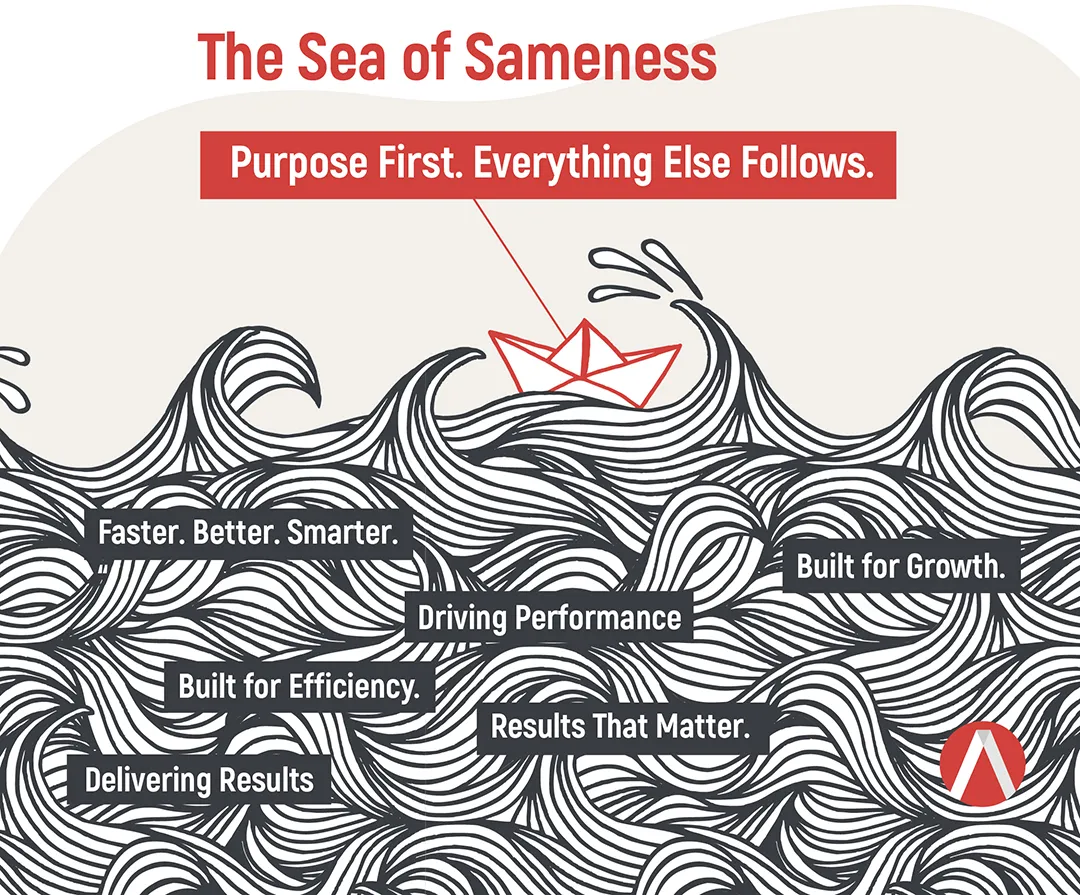
Here’s the uncomfortable truth high-level leaders already sense: We’re living in The Great Commoditization.
Technology has caught up. Features blur. Messaging blends. AI amplifies trends so fast that today’s unique claim becomes tomorrow’s table stakes.
And yet, some brands continue to stand out. Those are the ones that stopped trying to differentiate and started creating a new category of value that the market didn’t even know it was missing.
Category Creation: The Quiet Growth Lever
Let’s dispel a myth: Category creation is not just for Uber, Salesforce, Airbnb, or Tesla.
Those are macro categories; massive, market-shifting movements. But most businesses succeed with something much more attainable:
Micro-categories
Small, sharp, distinct spaces that they…and only they…can own. Think:
- A financial service that shifts from “wealth management” to “financial longevity coaching.”
- A healthcare tech tool that pivots from “patient data” to “anticipatory care intelligence.”
- A retailer that stops selling “clothes” and starts selling “confidence-first apparel curation.”
These aren’t taglines. They are new strategic spaces. And the moment your audience sees that space and says, “Oh, that’s what we’ve been missing,” you win.
The Insight That Sparks the Category
At Avocet, I’ve learned that category creation starts with one thing: A moment of insight so sharp it changes how you see the problem.
One of my favorite examples is a client in advanced manufacturing. They believed their biggest differentiator was precision. So did every competitor.
But interviews revealed something more profound: Their customers weren’t buying precision; they were buying risk reduction.
That was the Aha! Not “better manufacturing.” A new category: Operational Risk Assurance.
Suddenly the company wasn’t competing against manufacturers. They were competing against risk. That’s the power of a category.
The Story Customers Want to Join
Here’s the real magic:
Categories are built through language. Not features. Not price. Not specs.
When Steve Jobs launched the iPhone in 2007, he didn’t say:
“We built a slightly better phone.”
He said: “It’s an iPod, a phone, and an internet communicator.” A whole new category.
The category wasn’t “a better phone.” It was a new relationship between people and technology. And people followed the story.
What the Research Shows About Category Leadership
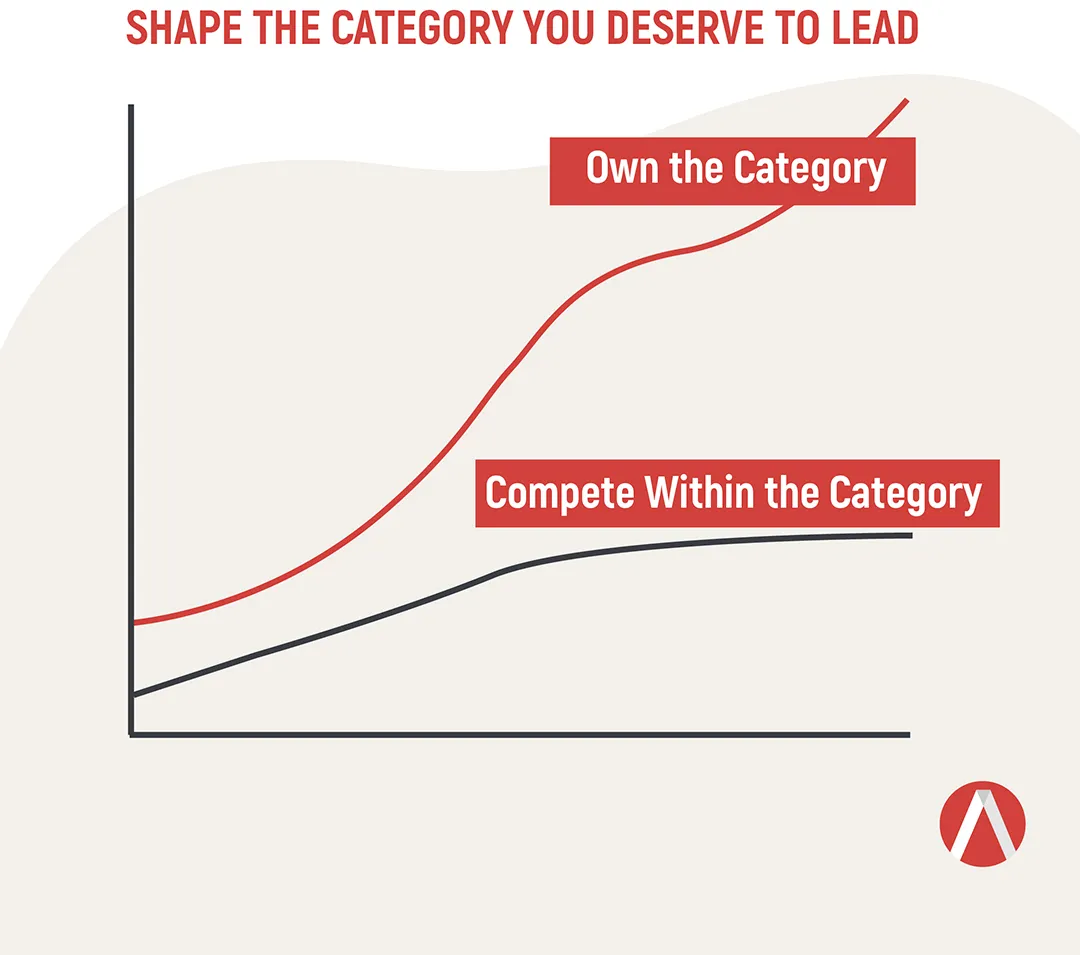
Even without getting lost in specific numbers, the trend is unmistakable across multiple studies from firms like McKinsey, HBR, and Bain:
- Category leaders consistently grow faster than brands that compete only on differentiation. Research across many industries shows that when companies define a unique strategic space, they accelerate growth at a rate that outpaces competitors still fighting within saturated categories.
- Category creators command more market value over time. Analysts have long noted that investors place a premium on companies that shape new markets rather than compete in existing ones, because they define the rules, expectations, and economics of that category.
-
Buyers gravitate toward category creators, even when alternatives cost less.
When a brand defines a new space and names an unmet need, customers often perceive greater value because they see the brand as the one setting the vision, not merely competing for attention. -
Category creators retain pricing power, including during downturns.
Brands that own a category aren’t forced into price wars. Their uniqueness gives them resilience, stability, and the ability to maintain margins even when markets tighten.
The pattern is clear: When you create the category, you shape the demand—and the value follows.
If you want growth that lasts—not growth that needs to be constantly defended—category creation is where it lives.
So How Do You Start?
Here’s the good news: You don’t need to blow up your entire brand. Start by asking:
- What problem do we solve that no one else is naming?
- What language could we own that reframes what we do?
- What belief do we hold that runs counter to the industry?
- What unmet desire or fear sits underneath why people buy from us?
- If we removed our competitors from the picture entirely, what would we call ourselves?
This is how micro-categories are born; quietly at first, then unmistakably.
A Final Thought: You Can’t Compete Your Way to Greatness
Category creators don’t win because they’re better.
They win because they’re different in a way customers didn’t know they needed until someone showed them. We all know that sameness is spreading faster than ever…and that means creating your own category isn’t a strategy. It’s a necessity.
Let’s Shape the Category You Deserve to Lead
If you’re ready to stop competing and start creating, I’d love to talk. Let’s explore the insight, the language, and the bold positioning that will define the strategic space your brand can own.
Your next leap forward might not be about being better, it might be about naming who you truly are.