
Key Takeaways:
- Great customer insight often gets diluted as campaigns move through execution.
- “Organizational gravity” pulls messaging away from customer language and back toward internal thinking.
- Synthetic customers help teams pressure test campaigns before launch using grounded AI buyer archetypes.
- AI works best as a customer empathy amplifier and not a replacement for strategy or creativity.
- The brands that maintain the buyer’s perspective throughout execution will build stronger trust and better performance.
The Buyer Leaves the Room Faster Than You Think
Ahead of my conversation with Matt Wilkinson, PhD MBA (aka Dr. Wilkinson to his colleagues and fellow researchers), CEO of Strivenn, I found myself thinking about a pattern I’ve watched unfold inside countless marketing organizations over the years.

Matt Wilkinson
It almost always begins with the right intentions.
The team invests in research. Customer interviews are conducted. Personas are developed. Insights are captured carefully and strategically. Everyone aligns around understanding the buyer.
And then the execution process begins.
The campaign moves through layers of approvals. Messaging gets revised. Product language creeps in. Legal reviews soften claims. Internal stakeholders begin adjusting copy based on what feels comfortable rather than what resonates externally.
Before long, something subtle, but incredibly important, has happened.
The customer’s voice has been replaced by the organization’s voice.
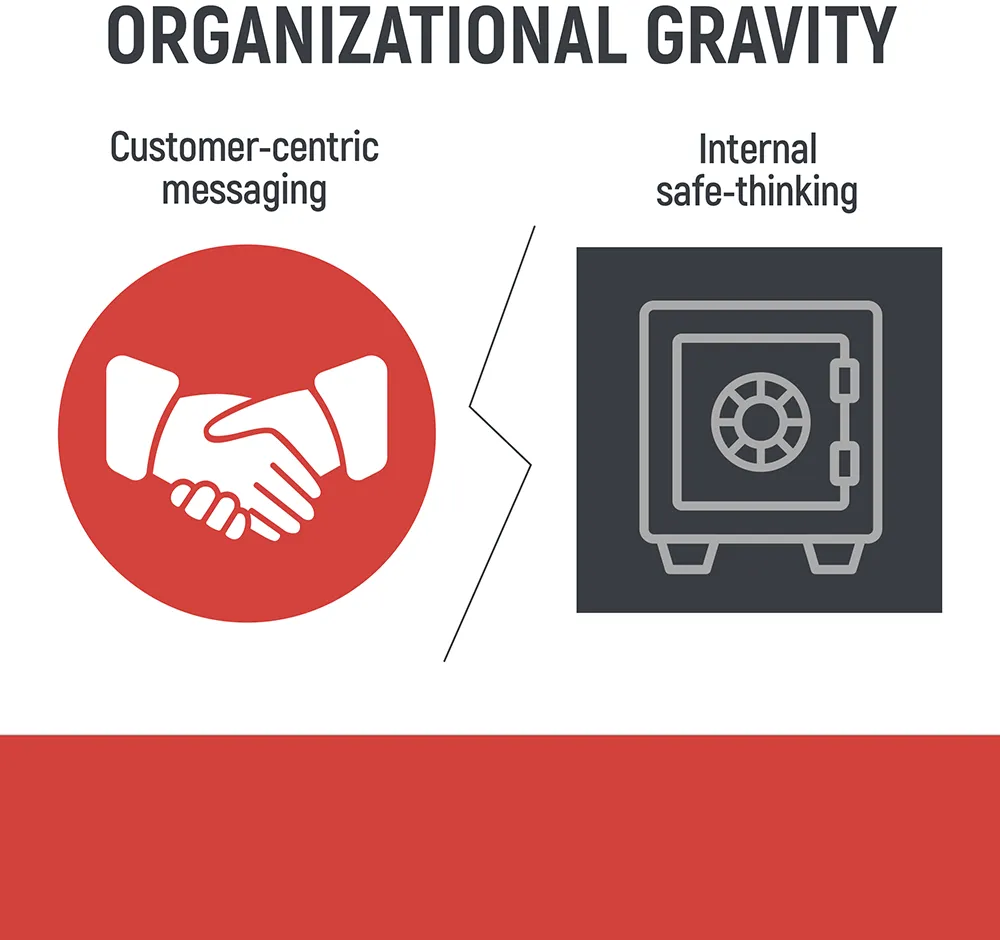
Matt has a term for this: organizational gravity.
And once you recognize it, you begin seeing it everywhere.
Why Customer-Centric Messaging Breaks Down
One of the most fascinating parts of my conversation with Matt was his explanation of why this happens so consistently, even among sophisticated marketing teams.
It’s not because marketers do not care about customers.
It’s because sustaining an outside-in perspective throughout execution is incredibly difficult.
As Matt explained, marketers are constantly trying to “step into someone else’s shoes” while balancing internal expectations, product knowledge, stakeholder opinions, and brand standards. Over time, organizations naturally drift back toward the language and framing they know best: their own.
The result is messaging that feels polished internally but disconnected externally.
And in today’s environment, that disconnect is expensive.
Buyers are overwhelmed with content. Skeptical of marketing. Quick to tune out anything that feels generic or overly corporate. If messaging fails to reflect their actual problems, pressures, and priorities, trust erodes quickly.
That’s where synthetic customers enter the conversation.
Synthetic Customers: Bringing the Buyer Back Into the Process
Matt describes synthetic customers as grounded AI representations of your actual buyers built using real voice-of-customer research, interview transcripts, social listening, and market intelligence.
Unlike static persona documents that often disappear into shared folders after kickoff meetings, synthetic customers create an active way for teams to pressure test messaging throughout the campaign lifecycle.
Instead of guessing how a buyer might respond, marketers can ask:
- Does this language resonate?
- Are we overlooking an important stakeholder?
- Does this messaging feel too internally focused?
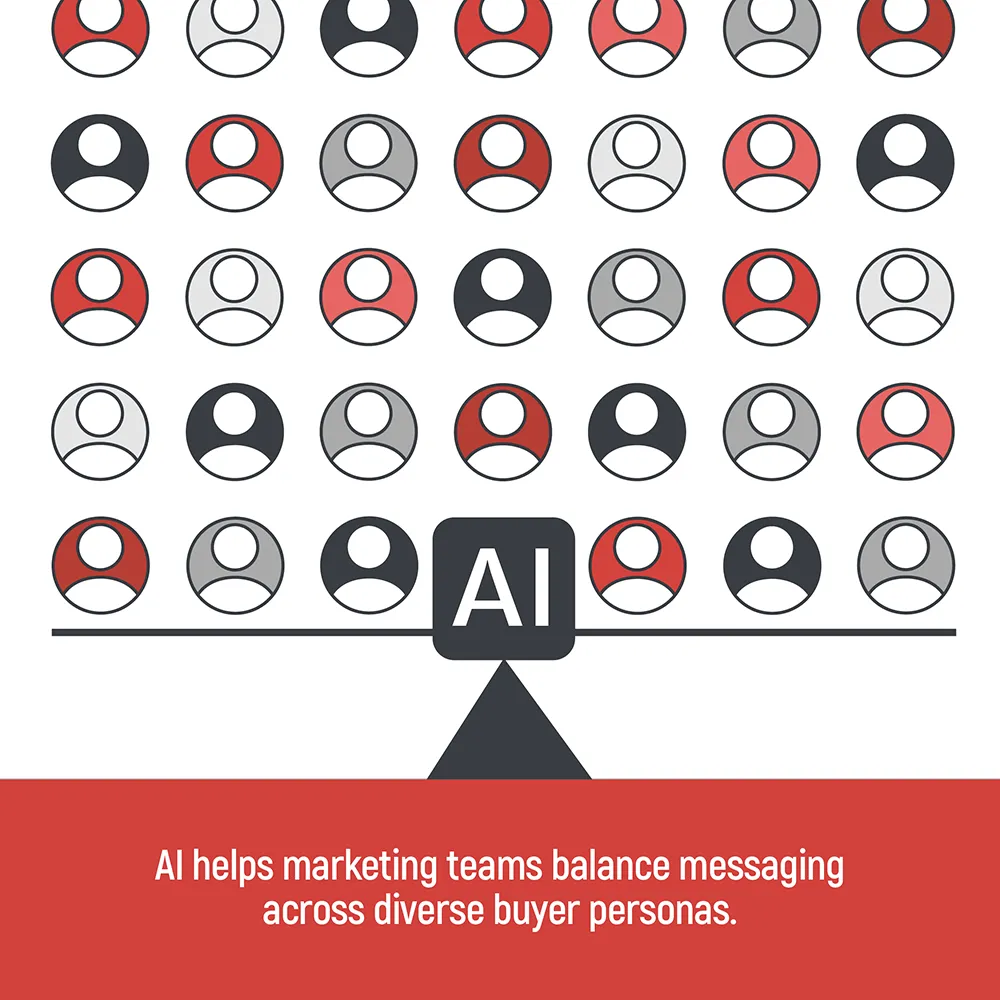
- Which buyer personas are being underrepresented?
That last point particularly stood out to me.
Matt shared that while reviewing messaging on his own website, a synthetic customer identified that he was “under-indexing” on one audience segment entirely. The AI surfaced gaps in how certain personas were being addressed and highlighted where additional messaging was needed.
That kind of visibility is difficult to achieve consistently through internal review processes alone.

Nate Skinner
Nate Skinner , CMO of 8am, the market-leading professional business platform reinforced this exact shift during a previous StrategyCast conversation when he explained how his team built an internal AI model grounded in customer intelligence.
As Nate shared, “…where we get a lot of value is in creating a model, literally our own model and saying this is our customer, this is our voice, this is our solution book… We feed that into our own ChatGPT instance and it… knows then what to say and how to say it and it gets us 80% of the way there.” StrategyCast (Episode #554)
That statement stayed with me because it perfectly captures the role AI should play inside modern marketing organizations.
Not replacing strategic thinking.
Not replacing human understanding.
But helping teams stay connected to the customer throughout execution.
AI Is Not Replacing Strategy, It’s Strengthening Empathy
One thing Matt was exceptionally clear about: synthetic customers are not a substitute for real customer research or human creativity.
And frankly, that distinction matters.
There is a growing temptation across industries to treat AI as a shortcut for strategic thinking. But AI can only work effectively when grounded in meaningful customer insight.
As Matt explained, the strongest synthetic customers are built from rich voice-of-customer research:
- qualitative interviews
- behavioral observations
- social listening
- and deep customer understanding gathered over time
Without that foundation, AI simply infers.
And as we all know, inferred assumptions are dangerous when building strategy.
Wes Michael, founder and CEO of Rare Patient Voice, echoed this caution during a previous StrategyCast discussion when talking about the rise of synthetic respondents.

Wes Michael
As Wes explained, “…there’s a new thing now called synthetic respondents. And… they use AI from real people to train them, and then you might show them concepts.” StrategyCast (Episode #516)
But he quickly followed that with an important warning:
“But be careful because you don’t wanna go to market… The real people are the ones who spend the real money on your product.”
That balance matters.
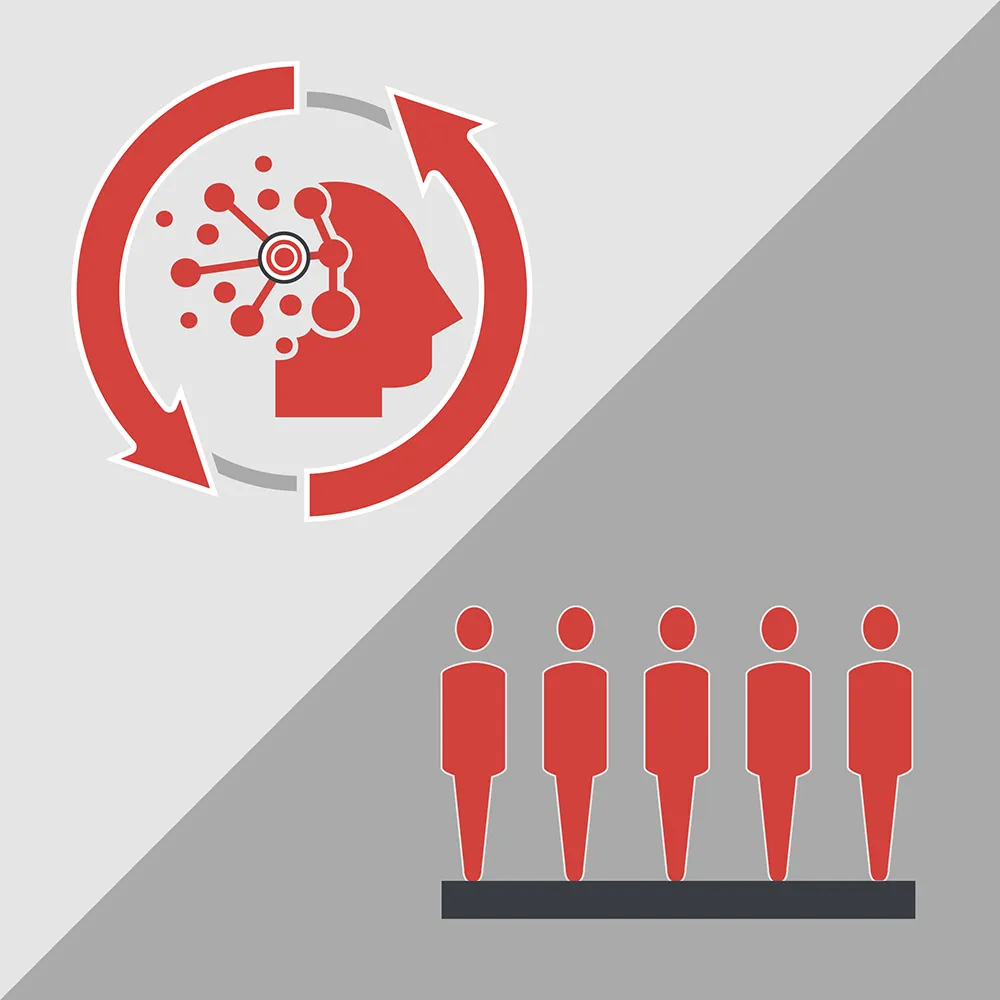
Synthetic customers are not replacements for human truth. They are stress-testing mechanisms that help organizations preserve customer empathy throughout execution.
In many ways, this mirrors what PwC recently described as the rise of the “invisible focus group,” where AI enables organizations to continuously learn from customer behavior, preferences, and feedback at scale rather than relying solely on static research moments. The difference is that organizations still need human judgment guiding the process if they want insight to translate into trust and meaningful customer connection.
Nate reinforced this idea as well when he explained that AI’s greatest value is creating operational lift so humans can focus on the most important work.
As Nate put it, this process “frees our team up to do is the last most important bits to make sure it looks perfect, that it’s on message,” because ultimately, “all of it requires a professional human who understands the problem and the customer.”
Because the reality is this:
Most marketing breakdowns do not happen during strategy development.
They happen during execution.
The Future of Marketing May Depend on This Shift
The organizations that succeed in the next era of marketing will not necessarily be the ones producing the most content or adopting the most AI tools.
They will be the ones best able to maintain authentic customer understanding at scale. And if they succeed, that buyer will stay in the room a little bit longer.
Synthetic customers offer a way to operationalize customer empathy across teams, campaigns, and workflows. They help organizations identify blind spots before campaigns go live and ensure messaging reflects the reality of the buyer, not just the comfort of the business.
And perhaps most importantly, they force organizations to continuously ask a question that should sit at the center of every campaign:
Would the customer actually care about this?
Food for Thought
- Where does your messaging begin drifting away from the customer?
- Are your personas actively guiding execution, or sitting untouched after kickoff?
- How often are campaigns optimized for internal approval rather than customer resonance?
- Could synthetic customers help your team identify blind spots before launch?
- What would happen if the buyer stayed present throughout your entire campaign process?
If this conversation resonates with you, I highly recommend listening to the full StrategyCast discussion with Matt Wilkinson here, where we dive much deeper into organizational gravity, synthetic customers, and the evolving role of AI in customer-centric marketing.