

Key Takeaways:
- AI should enhance human relationships, not replace them.
- Strong strategy must guide every technology decision.
- Trust is built through consistency, authenticity, and meaningful interactions.
- The most successful brands combine automation with human expertise.
- Relationships remain the foundation of long-term business growth.
“We’re focusing on AI allowing us to still have that human connection, just enhancing it, not replacing it.” — Fred Wiechmann

Fred Wiechmann
What struck me most during my recent StrategyCast conversation with Fred Wiechmann, Vice President of Marketing at GameTime, wasn’t necessarily what he had to say about artificial intelligence.
It was what he had to say about relationships.
Like many business leaders today, Fred is embracing AI and actively exploring ways it can improve efficiency, visualization, responsiveness, and customer experience. But throughout our discussion, he kept returning to the same idea: technology should support relationships, not replace them.
That perspective feels especially important right now.
Organizations across nearly every industry are racing to implement AI-powered tools. Marketing teams are generating content faster than ever. Customer service departments are introducing chatbots and automation. Sales teams are experimenting with AI-driven outreach and prospecting. While these advancements create exciting opportunities, they also raise an important question:
How do we scale efficiency without losing the human connection that customers value most?
For Fred, the answer begins with strategy.
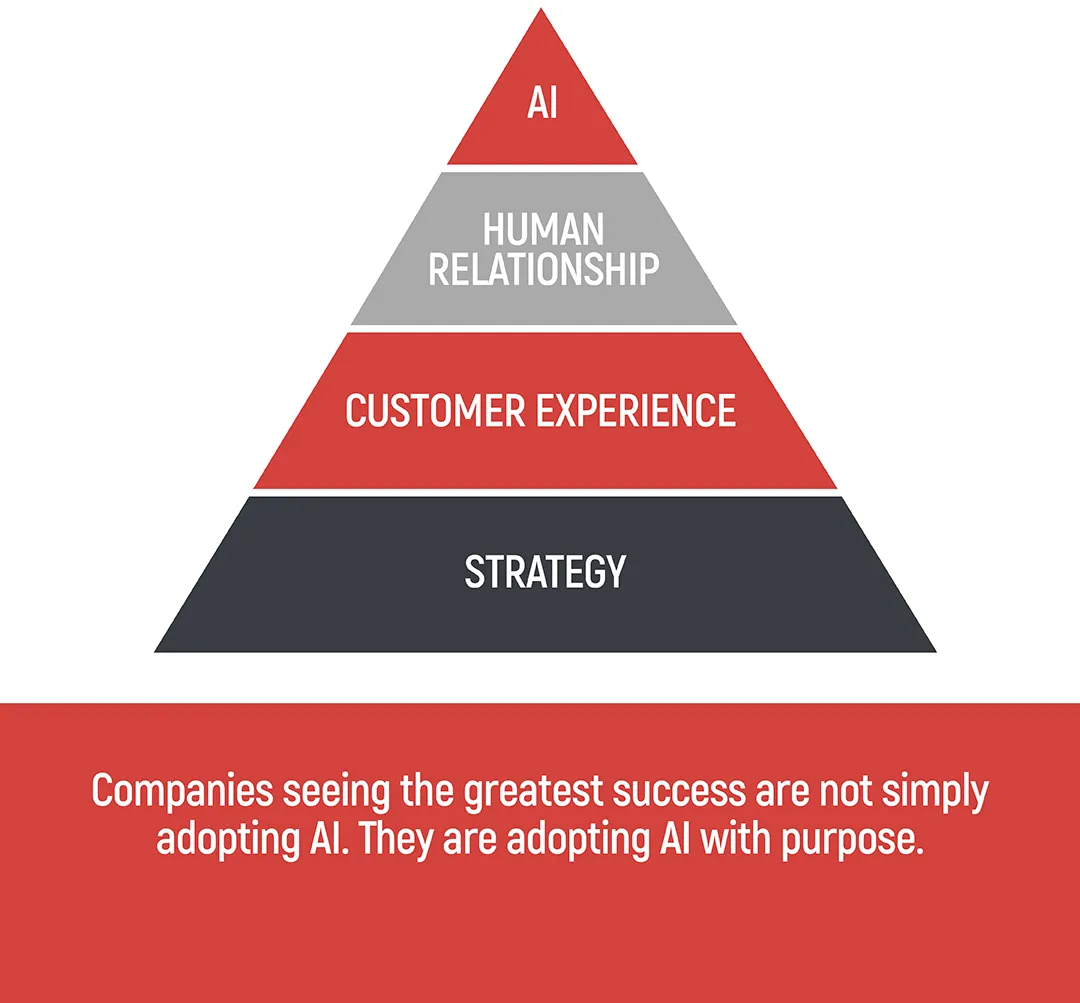
Strategy Must Lead Technology
One of the biggest mistakes companies make is allowing technology to dictate their direction rather than supporting a clearly defined business objective.
Fred emphasized that before introducing AI into any process, organizations must first understand their customers, define their goals, and identify where friction exists within the customer journey. Only then can they determine whether technology can help solve a meaningful problem.
This philosophy aligns with what many business leaders are discovering today. AI is incredibly powerful, but it is not a substitute for strategic thinking. In fact, organizations with weak strategies often find themselves creating more content, more automation, and more activity without generating better outcomes.
The companies seeing the greatest success are not simply adopting AI. They are adopting AI with purpose.
Enhancement, Not Elimination
One phrase from Fred’s interview perfectly captured his approach to AI, “The term I’m kind of focusing on is an enhancement model, not an elimination model.”
That distinction is one every leader should consider.
Too much of the current AI conversation focuses on replacement. Replacing tasks. Replacing jobs. Replacing human interaction. Fred sees a different opportunity. He believes AI should be used to enhance the capabilities of teams, allowing people to serve customers more effectively while maintaining the relationships that drive trust.
His perspective is reinforced by Mike Kaput, Chief Content Officer at Marketing AI Institute, who shared a similar viewpoint during StrategyCast Episode 481 who positions AI as a team sport that absolutely includes humans interacting to find the best solutions for the brand and that “…. if you are getting it to augment you by making your thinking better, by helping your thoughts scale better… that’s a whole different ballgame to me.”

Mike Kaput
Kaput goes on to explain, “I’d rather have a machine be able to help with these things so that I can come up with some uniquely human ideas, outputs, outcomes…”, which, in turns, helps strengthen those human relationships.
Together, their perspectives highlight an important shift in thinking. The goal should not be to remove people from the customer journey. The goal should be to equip people with better tools so they can create more value.
That enhancement-over-elimination mindset is echoed in recent research from Capgemini, which finds that the most successful customer experience transformations are human-led and AI-powered. Their research suggests that while AI can improve efficiency and scale, trust, empathy, and judgment remain distinctly human responsibilities.
Why Relationships Still Matter
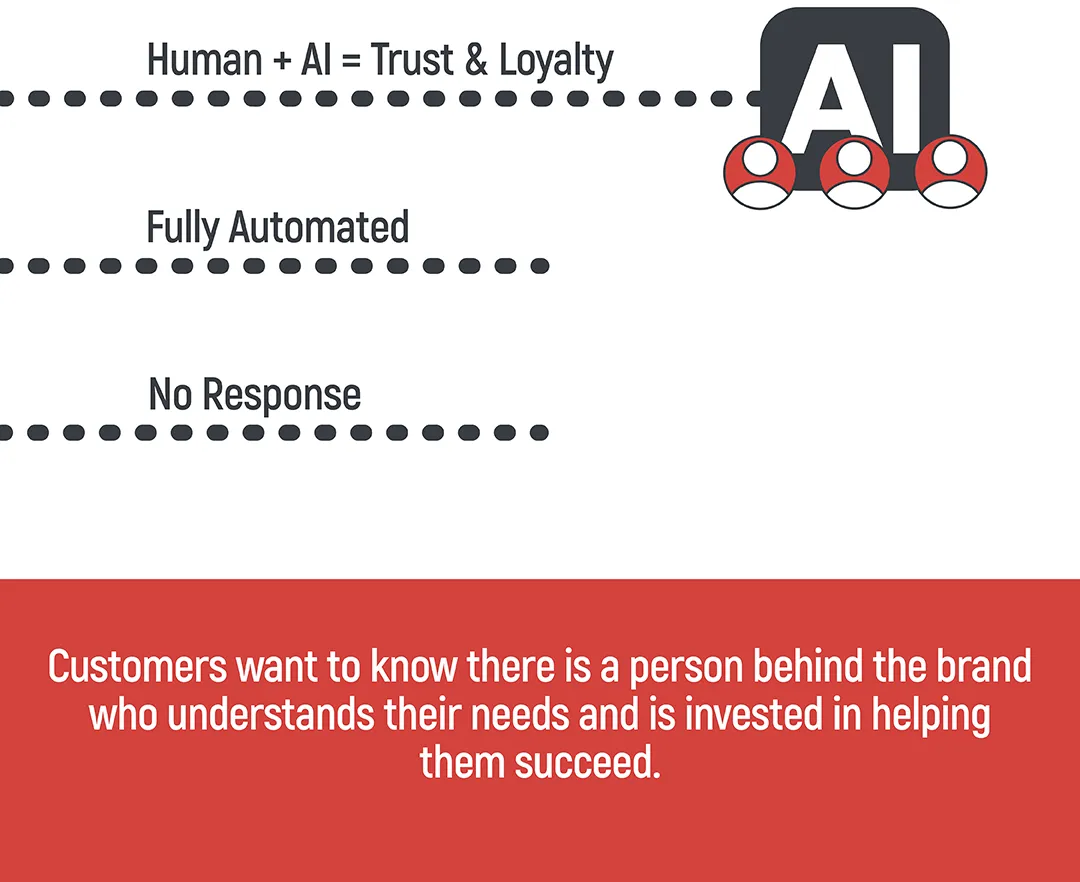
One of the most memorable stories Fred shared involved his experience evaluating three different service providers.
One company never returned his call.
Another provided a fully automated experience that was fast and efficient but lacked personal understanding.
A third company used automation to streamline the process but followed up with a real conversation that addressed his unique situation. That company ultimately earned his business.
The story illustrates something many organizations overlook when implementing automation. Customers do not necessarily object to technology. They object to feeling like a transaction.
The strongest customer experiences blend efficiency with empathy. Automation can handle routine tasks, gather information, and improve responsiveness. But meaningful relationships are still built through conversation, understanding, and accountability.
Customers want to know there is a person behind the brand who understands their needs and is invested in helping them succeed.
Trust Is Still the Competitive Advantage
Throughout our conversation, Fred repeatedly returned to the importance of trust. At GameTime, trust serves as a framework that guides everything from product development to customer engagement. Every decision is evaluated through the lens of how it improves the customer experience and strengthens long-term relationships.
That philosophy resonated deeply with me because trust sits at the center of everything we do at Avocet as well.
While technology will continue to evolve, the fundamentals of business remain remarkably consistent. Customers want to work with organizations they believe understand them. They want transparency. They want consistency. Most importantly, they want confidence that the promises being made will be fulfilled.
AI can help organizations deliver on those expectations more effectively. It can improve responsiveness, provide deeper insights, and create efficiencies across the customer journey. What it cannot do is replace the trust that is earned through authentic human relationships.
“If we can involve automation and the personalization and combine those two things with the human authentic touch, you’ll win customers over forever.” — Fred Wiechmann
Questions to Ask Yourself:
- Is your organization using AI to strengthen relationships or simply improve efficiency?
- Where are the most important trust-building moments in your customer journey?
- Does your technology strategy begin with business objectives or tool adoption?
- How can AI help your team create more meaningful customer interactions?
- Are your customers experiencing automation, or are they experiencing better service?
If you’d like to dive deeper into this topic, listen to Lori Jones’ conversation with Fred Wiechmann on StrategyCast, where they explore trust, authenticity, AI, customer experience, and why the future belongs to organizations that keep relationships at the center of everything they do.