

I’ve been especially excited to share this conversation with you because it challenges something I’ve seen throughout my more than three decades in marketing, and something I believe deserves a much bigger conversation in the boardroom.
When business growth slows, marketing is often the first place leadership looks for answers.
We need more leads. A stronger campaign. Better messaging. A refreshed brand.
And sometimes those are exactly the right solutions.
But what if they aren’t?
What if your marketing is doing its job beautifully, attracting attention, generating interest, and creating opportunities, but something inside your organization is preventing that momentum from becoming meaningful growth?
As we prepare for 2027, I believe CEOs and CMOs need to ask a question that may feel uncomfortable.
What if the problem isn’t your marketing? What if it’s your business?
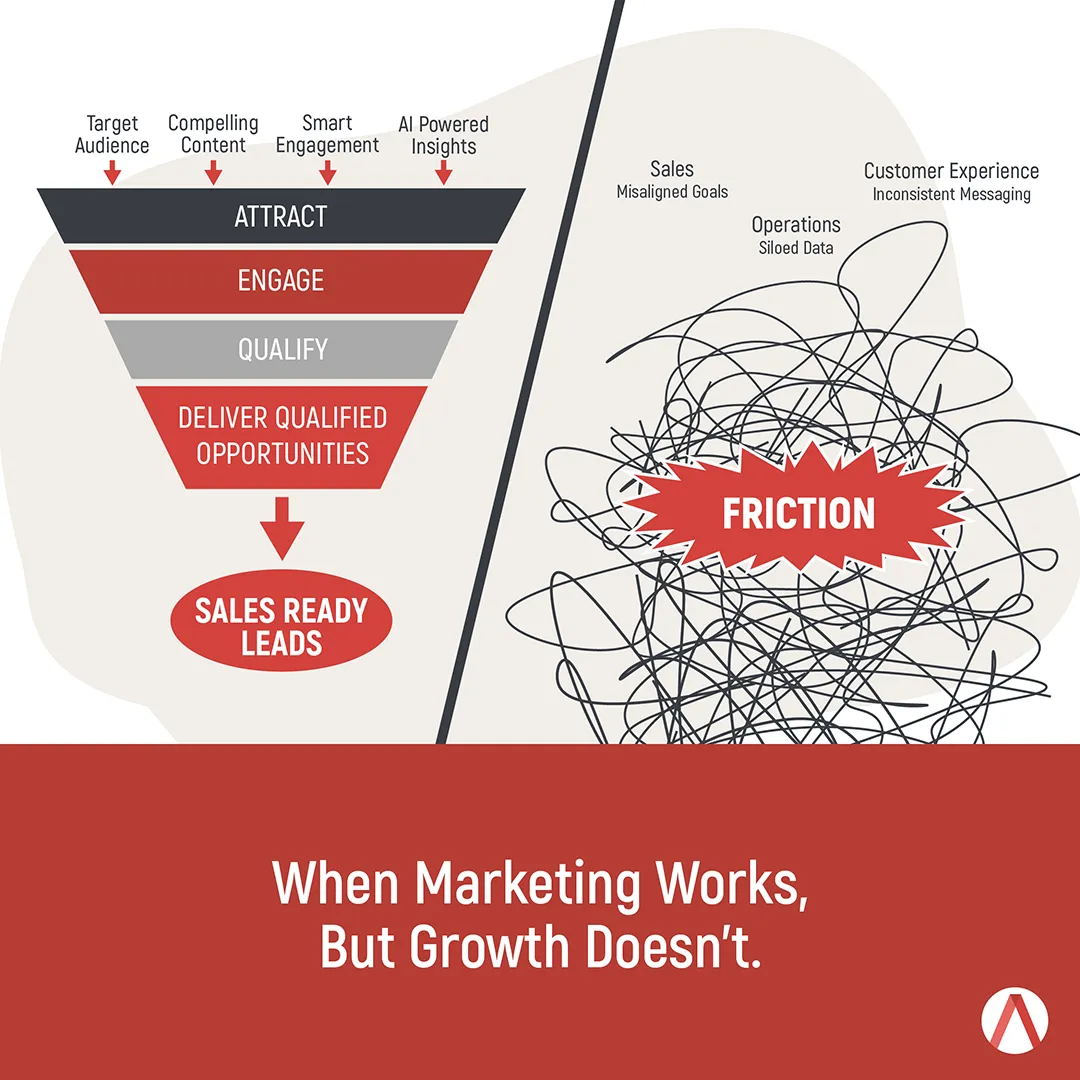
The Marketing Reflex: When More Isn’t the Answer
Marketing is visible. It has budgets, dashboards, campaigns, and measurable outcomes.
That makes it an easy target when performance disappoints.
But marketing can create demand. It cannot guarantee that the organization deserves that demand.
Consider a company promising exceptional responsiveness while customers struggle to get answers. Or a technology provider promoting simplicity while its implementation process creates unnecessary complexity.
The campaign may be successful. The experience isn’t.
And customers don’t distinguish between marketing, sales, operations, and service.
They experience one brand.
When the business experience contradicts the brand promise, the experience eventually becomes the brand.
Our Research Reveals Where Trust Breaks Down
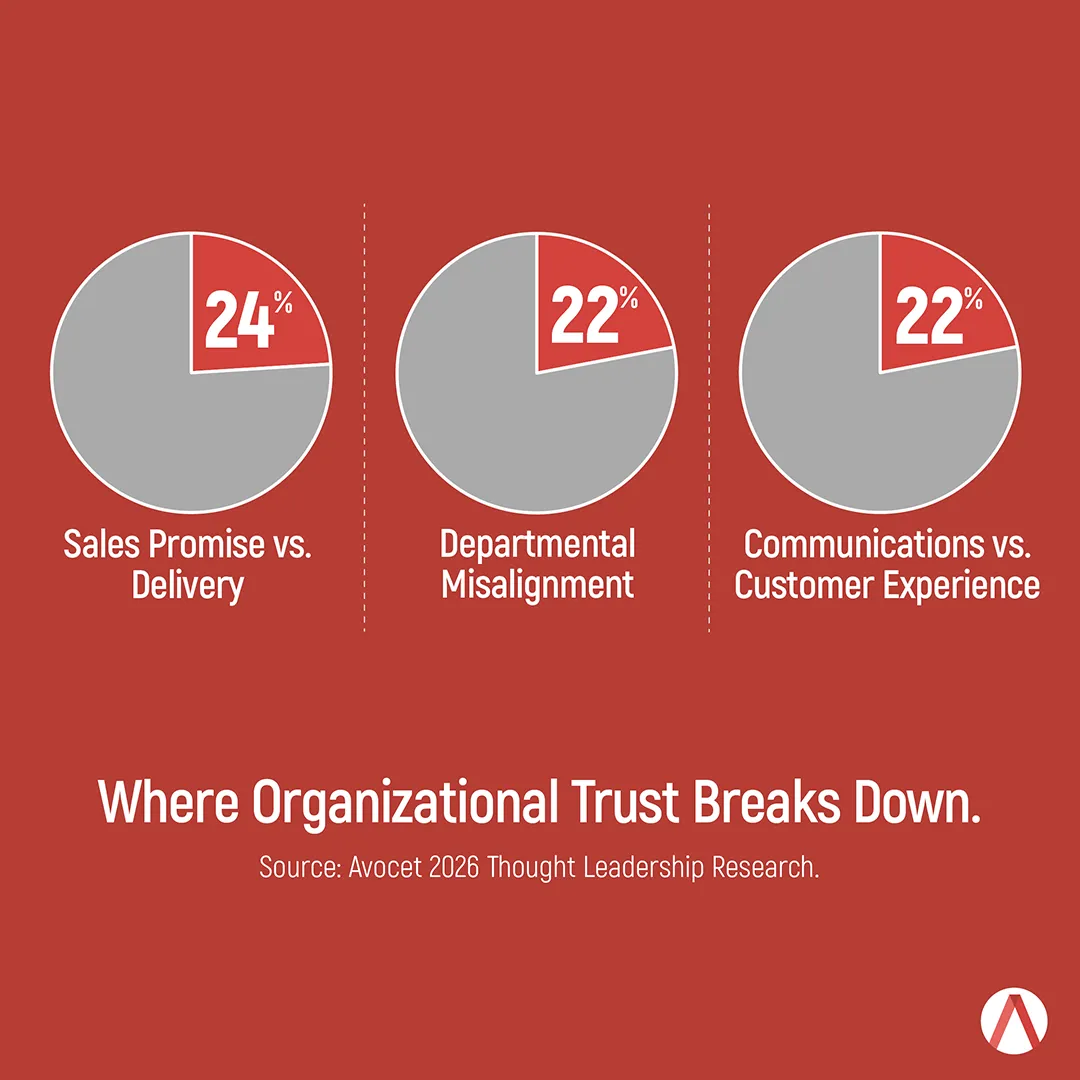
At Avocet, our 2026 thought leadership research uncovered some important organizational disconnects.
Among marketing decision-makers surveyed:
- 24% identified gaps between sales promises and actual delivery as a point where trust breaks down.
- 22% pointed to misalignment between departments.
- 22% identified disconnects between communications and customer experience.
These findings reinforce something I’ve believed for years.
Trust isn’t simply a marketing achievement. It’s an organizational responsibility.
And when departments operate independently, customers often experience the consequences.
The CEO and CMO Must Lead Together
Here’s where I believe marketing leadership needs to evolve.
CMOs are increasingly accountable for revenue, retention, and business growth. But many of the factors influencing those outcomes sit outside their direct control.
Product performance. Service delivery. Operational reliability. Customer support.
That’s why the relationship between the CEO and CMO is so important.
The CMO understands market expectations and customer perceptions. The CEO has the authority to align the organization around delivering on those expectations.
Together, they can move beyond asking, “How do we improve our marketing?”
Instead, they can ask, “What needs to change inside our organization to make our market position more credible?”
At Avocet, this thinking shapes our Belief Methodology. We begin with discovery, examining the market, competitive dynamics, customer expectations, and organizational realities before developing positioning and communications.
Because you cannot build a credible market position around a promise the business cannot consistently fulfill.
When Premium Becomes Earned, Not Charged
There’s another important business implication here.
Pricing power.
When customers struggle to experience meaningful differentiation, price becomes an easy comparison point.
But when organizations consistently demonstrate expertise, reliability, and value, the conversation changes.
Instead of asking why one provider costs more, customers begin considering what they might risk by choosing another.
That’s especially important in complex B2B relationships, where the wrong decision can affect productivity, operations, and professional credibility.
At Avocet, we often say we want premium to feel earned, not charged.
That happens when marketing promises and business performance reinforce each other.
So Here’s My Challenge To You
Before you approve your next major marketing investment, bring your leadership team together and ask one question:
What is the single biggest obstacle inside our organization that could prevent customers from experiencing the value we’re promising?
Then decide who will own fixing it.
Not marketing by default. Someone with the authority to change it.
Because the strongest brands aren’t simply the ones that communicate their value most effectively. They’re the ones that consistently deliver it.
Your next breakthrough may not come from a new campaign. It may come from making your organization worthy of the promises your marketing is already making. If you’d like to explore these ideas further, I invite you to listen to my latest StrategyCast solocast, where I discuss why marketing alone cannot solve organizational problems and how CEOs and CMOs can work together to create more credible, sustainable growth.