

“Having more data doesn’t necessarily create the right decision. It just makes it more complicated.” – Rachel Conforti
What happens when every marketing dashboard looks successful, but the business isn’t growing?
I’ve been looking forward to sharing my conversation with Rachel Conforti, whose career has taken her from traditional out-of-home advertising to sophisticated advertising technology and, today, television measurement at iSpot. What I especially appreciate about Rachel is her ability to make complicated measurement challenges feel remarkably human.

Rachel Conforti
We both love the possibilities technology creates. But we also recognize something that can get lost in our enthusiasm for innovation: A number is only meaningful when we understand what it’s telling us.
At Avocet, we’re constantly helping clients connect marketing performance to business objectives. And Rachel’s perspective reinforced something I believe deeply. Our responsibility isn’t to produce more impressive reports. It’s to make better decisions that move businesses forward.
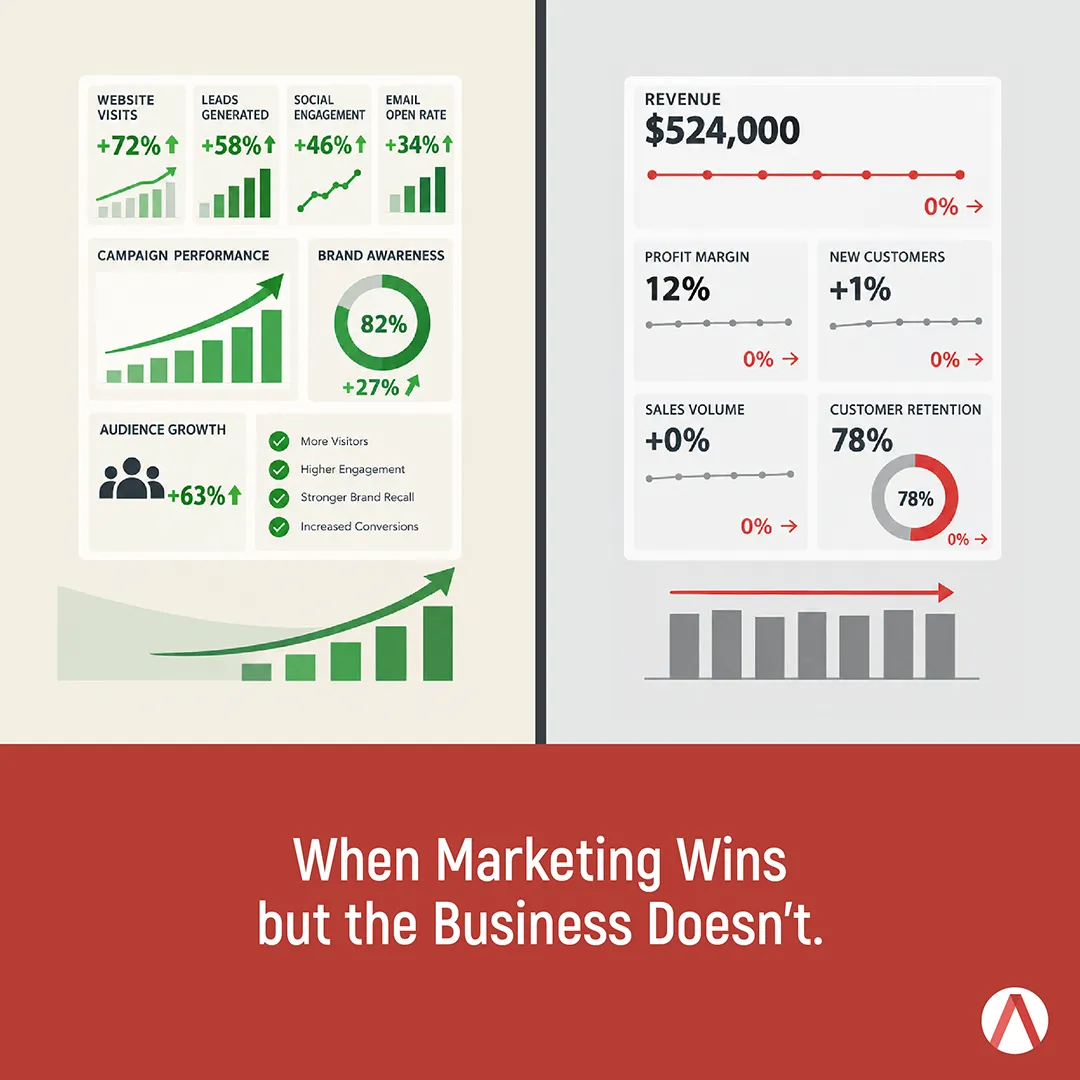
More Data Doesn’t Automatically Mean More Confidence
Marketers have spent years building sophisticated measurement systems. We can track impressions, engagement, attention, conversions, and countless other signals.
Yet more visibility doesn’t necessarily create more clarity.
Rachel shared an example from her experience at DoubleVerify. Advertisers began optimizing aggressively for viewability, only to discover that focusing on that metric without considering fraud could actually drive investment toward fraudulent activity.
The solution wasn’t abandoning viewability. It was understanding how signals worked together.
This is where marketing leadership becomes especially important. We must resist treating individual metrics as definitive evidence of success.
As marketing Strategist Rebecca Shaddix reminded us on StrategyCast Episode 528, “…all of the data in the world can’t make a decision for us. Being able to back that up with the business impact is so important.”
Exactly. Data should inform our judgment, not replace it.

Rebecca Shaddix
When Attention Doesn’t Translate Into Action
One of Rachel’s most compelling examples involved Mattress Firm.
The company had a campaign generating attention, but that attention wasn’t translating into the retail sales it needed.
By examining creative effectiveness alongside other performance indicators, the team recognized that capturing attention wasn’t enough. The messaging needed to better educate consumers, address their sleep challenges, and communicate meaningful solutions.
The resulting campaign became its highest-performing campaign in seven years, according to Rachel, with sales increasing.
That’s a powerful reminder that the metric we optimize for can determine the outcome we get, even when it’s the wrong outcome.
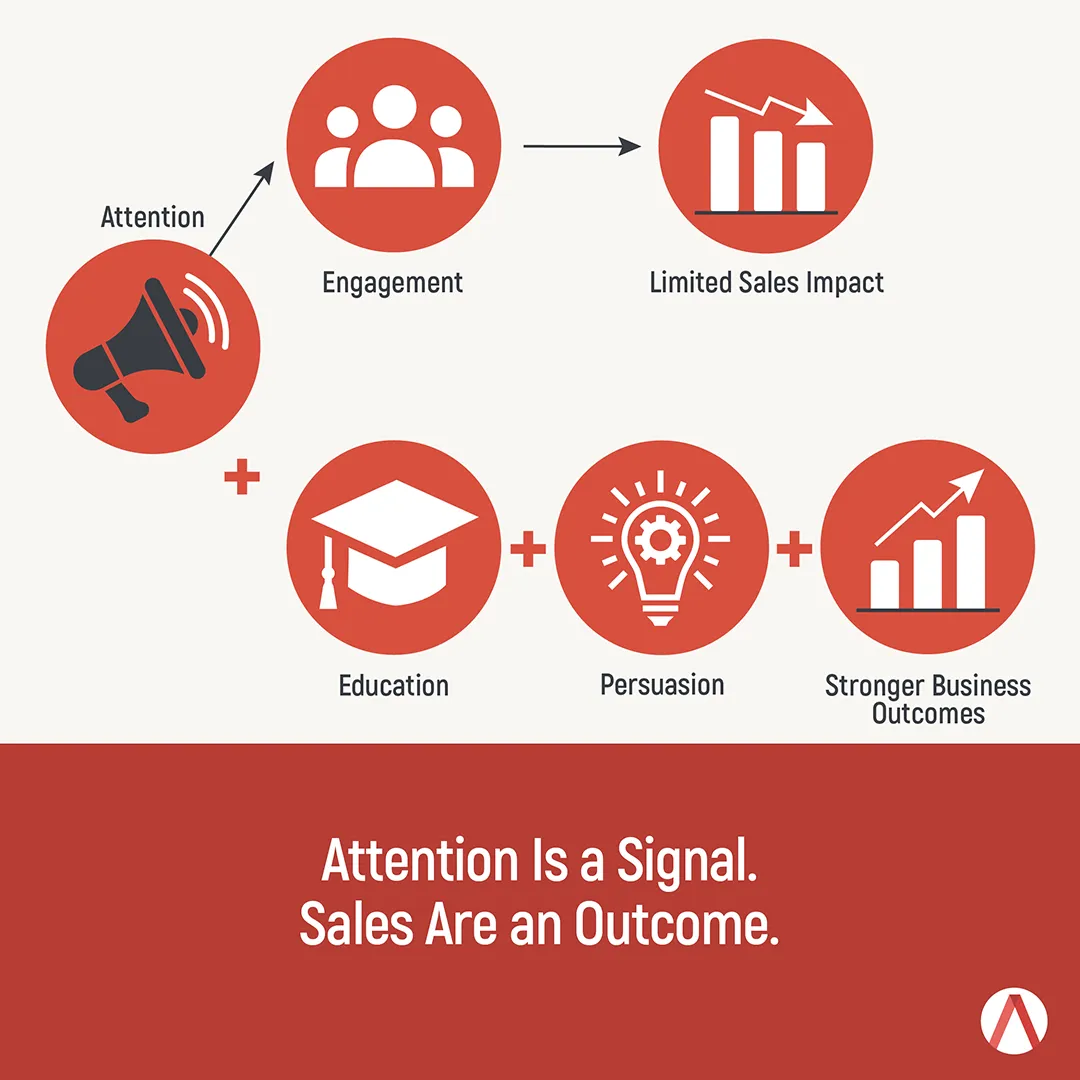
A Signal Is Not the Whole Story
Rachel captured this distinction beautifully:
“A signal is a really great indicator of engagement. And it’s just not the full picture.”
Consider an airline using AI to optimize advertising. Rachel described a situation where the technology interpreted a reservation as a completed ticket purchase. The system continued optimizing toward reservations, but the expected business results never materialized.
AI was doing exactly what it had been instructed to do. The underlying definition of success was wrong.
I shared a related experience from my own travels. After purchasing an airline ticket to Chicago, I continued receiving advertising encouraging me to book the very trip I’d already purchased.
How much marketing investment gets wasted because our systems recognize activity but fail to understand intent?
Measurement Must Connect Strategy to Business Results
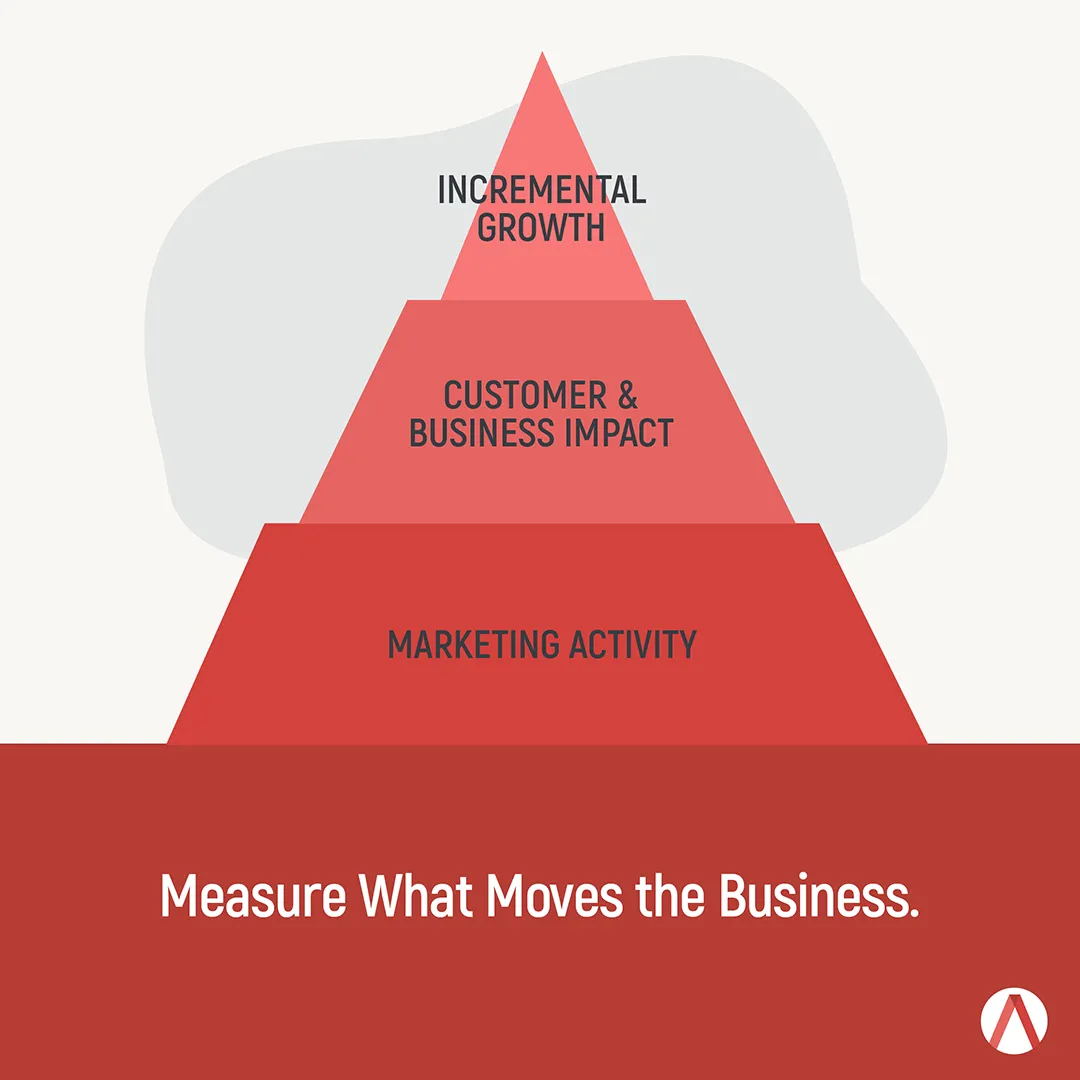
As Boston Consulting Group explains in its 2026 analysis of marketing incrementality, measurement must help organizations distinguish activity from genuine incremental impact. Its framework connects strategic investment decisions, tactical choices, and operational optimization through stronger causal evidence.
That distinction matters enormously.
A campaign can generate clicks without creating incremental demand. A television investment can build brand preference long before a purchase occurs. A B2B program can influence a buying committee months before an opportunity enters the pipeline.
The right measurement framework depends on the business model, customer journey, and growth objectives.
Rachel advocates starting with those objectives, then determining which marketing signals genuinely support them.
I couldn’t agree more.
AI Can Accelerate Analysis. Leadership Must Determine Direction.
AI is making it possible to analyze enormous datasets, identify patterns, and connect information across systems faster than ever.
But speed doesn’t establish truth.
Rachel offered a particularly important reminder:
“Don’t rely on AI as the leader. You’re the leader.”
That statement deserves a place in every marketing leadership meeting.
AI can help identify opportunities. It can surface inconsistencies. It can even help teams reconcile disconnected information.
But someone must still question the source, interpret the context, and determine whether the recommendation makes business sense.
The future belongs to leaders who combine technological sophistication with disciplined human judgment.
Your CFO Shouldn’t Be Surprised by Your Definition of Success
Perhaps the most practical takeaway from Rachel’s perspective is the importance of shared accountability.
Marketing, sales, finance, and executive leadership must agree on what success looks like before campaigns launch.
For an early-stage business, that might mean qualified pipeline and revenue influence. For an established brand, it could mean incremental sales, retention, or market share.
The technology doesn’t need to be unnecessarily complicated. The business objectives need to be clear.
At Avocet, this connects directly to our belief that credible evidence builds confidence, confidence builds trust, and trust creates the foundation for growth.
Questions to Ask Yourself
- Are our dashboards measuring meaningful business progress or simply marketing activity?
- Which signals are we optimizing without understanding their relationship to revenue?
- Do marketing and finance share the same definition of success?
- Where might AI be accelerating decisions based on incomplete or misleading information?
- Are we investing in more reporting or better judgment?
Rachel’s perspective brings us back to a fundamental leadership responsibility:
“Just because you could measure something doesn’t mean it’s proving value along the journey.”
That’s the challenge and the opportunity.
We don’t need to measure everything simply because we can. We need to understand which measurements deserve our attention, which outcomes deserve our investment, and which decisions will genuinely move the business forward.
Because a dashboard can tell us we’re winning. Only meaningful business results can prove it. To explore these ideas further, listen to my conversation with Rachel Conforti on StrategyCast Episode 614, where we discuss marketing measurement, AI, business outcomes, fragmented data, and why human judgment remains essential to effective leadership.