I’ve been looking forward to sharing this particular conversation with you because it touches on something I’ve been thinking about quite a bit lately, both as a marketer and as a business leader.
We spend an extraordinary amount of time helping organizations establish credibility, earn confidence, and build trust. And for good reason. Those are essential foundations of a successful brand.
But I’ve been asking myself a question that I think deserves more attention.
What happens when your customers trust you, but they trust your competitors just as much?
Think about that for a moment.
You may have an exceptional reputation, strong leadership, proven results, and loyal customers. But if three other organizations can make similar claims, what ultimately makes someone choose you?
I believe the answer lies in understanding the difference between being a brand people trust and becoming a brand people genuinely believe in.
And that distinction has significant implications for how we approach marketing, differentiation, and long-term growth.
Credibility Gets You Considered. Belief Gets You Chosen.
At Avocet, we’ve been examining a progression that I believe helps explain how meaningful customer relationships develop:
Credibility → Confidence → Trust → Belief
Each stage answers a different question.
Credibility asks, “Are you legitimate?” Confidence asks, “Can you deliver for me?” Trust asks, “Will you do what you say?” And belief asks, “Do I believe enough to act?”
That final question changes everything.
Credibility gives customers a reason to listen. Confidence gives them a reason to consider. Trust gives them a reason to rely on you.
But belief gives them a reason to choose you.
Consider Costco. Its reputation isn’t built primarily on grand brand declarations. It’s reinforced through consistent experiences, dependable value, and the confidence customers develop over time.
Eventually, customers stop evaluating every purchase from scratch. They develop a broader conviction about what the brand represents.
That’s when trust begins becoming something more powerful.
The Problem with Trust Without Distinction
Here’s where I think marketers need to challenge conventional thinking.
Being trustworthy is essential. But being trustworthy isn’t necessarily distinctive.
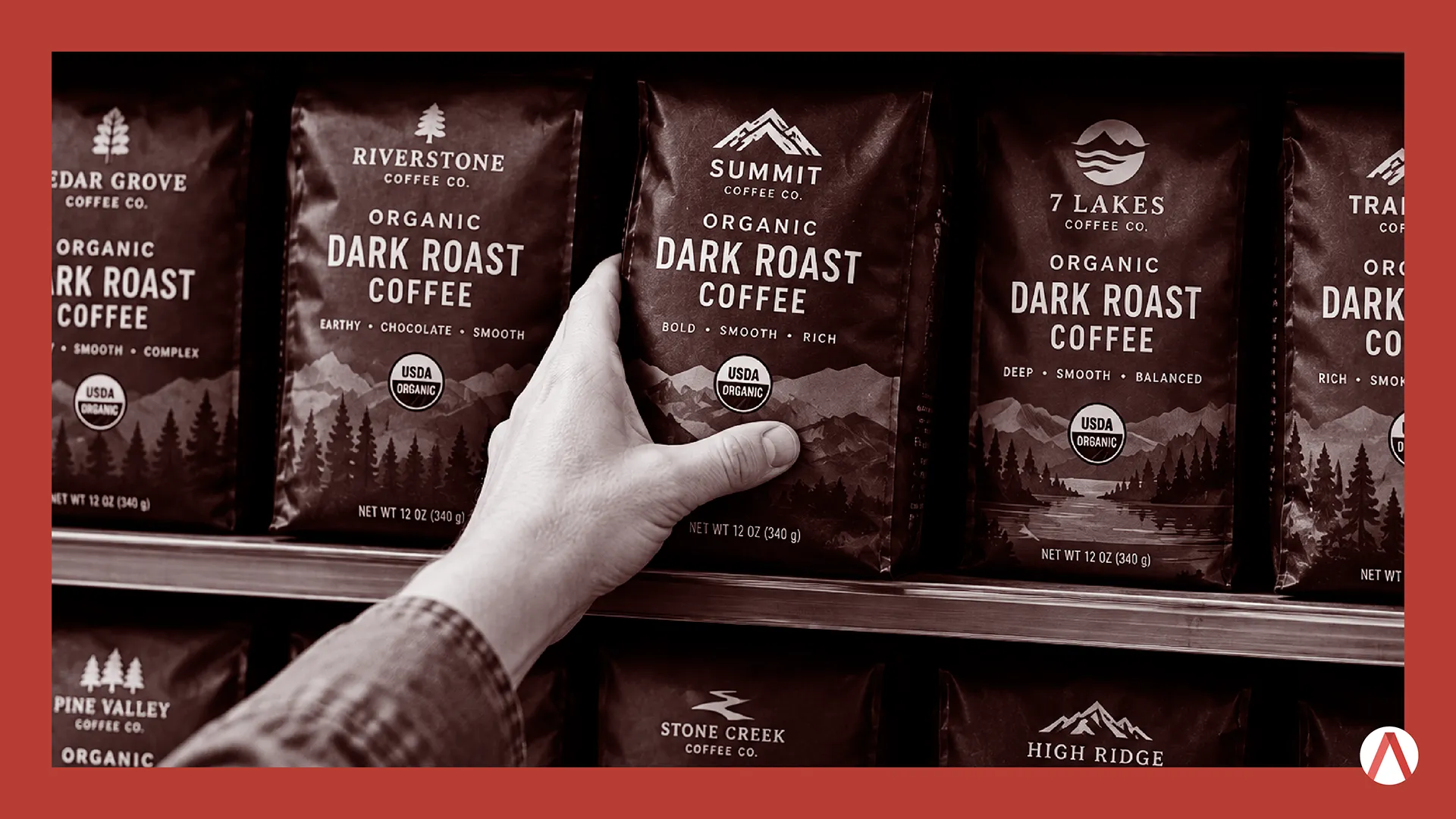
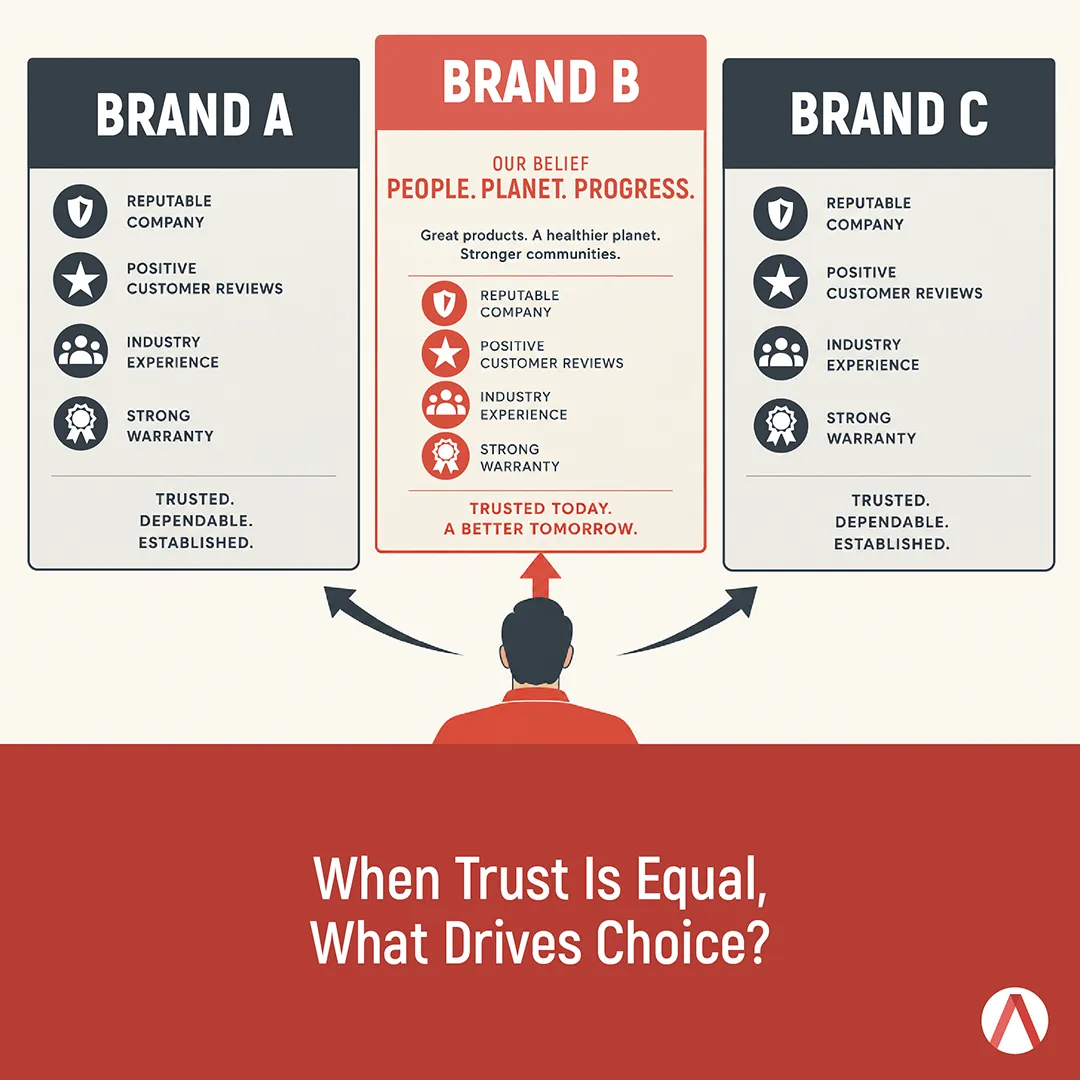
Imagine three companies competing for the same business. All have excellent reviews, experienced leadership, proven capabilities, and impressive customer relationships.
All three are trusted.
Who wins?
The answer depends on something beyond credibility.
What do customers believe about one organization that they cannot just as easily believe about another?
That question takes us beyond simply communicating what we do well. It challenges us to uncover what makes our organization meaningfully different and why that difference matters.
Because “trust us” isn’t a competitive position.
It’s an expectation.
Sometimes the Most Powerful Brand Belief Is Already There
We experienced this firsthand through our work with Volunteers of America Colorado.
This is an organization with more than a century of service, supporting over 100,000 people annually through more than 50 programs statewide.
Its credibility was already well established.
But with so many programs serving different needs, there was an opportunity to reveal the larger idea connecting its work.
We discovered that the ultimate measure of success wasn’t simply the number of people receiving services.
It was helping people reach a point where they no longer needed them.
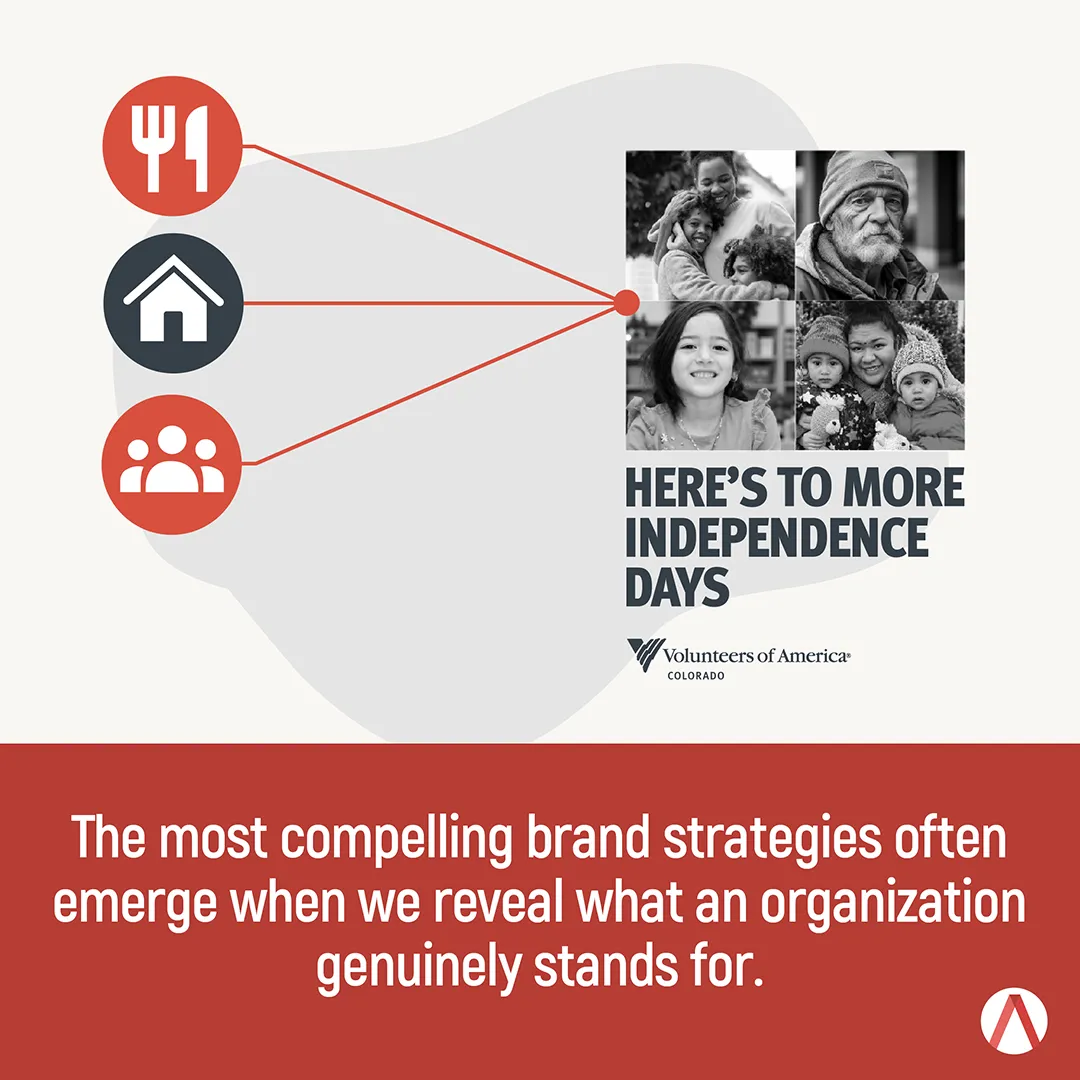
That insight became “Here’s to More Independence Days.”
An Independence Day represents the moment someone can move forward independently, without needing the organization’s assistance.
Suddenly, individual programs became part of a much more meaningful story.
A meal wasn’t simply a meal. Shelter wasn’t simply shelter. Each represented another step toward independence.
And importantly, we didn’t manufacture a new organizational promise.
We uncovered a belief that was already present.
That’s an important distinction. The most compelling brand strategies often emerge when we reveal what an organization genuinely stands for, rather than attempting to create something its actions cannot support.
Belief Must Be Earned Through Experience
Of course, identifying a compelling belief is only part of the equation.
Customers need reasons to believe it’s true.
At Avocet, we examine six essential conditions: clarity, distinction, credibility, confidence, consistency, and human reinforcement.
Does your audience understand what you stand for? Can they distinguish you from competitors? Is there meaningful evidence behind your claims? Do your employees reinforce your promise through their actions?
These aren’t simply messaging considerations.
They’re organizational commitments.
And when those commitments are demonstrated consistently, something extraordinary can happen.
Belief begins creating permission for a brand to lead.
Consider Apple. Customers don’t simply trust the company to manufacture functioning devices. Many have developed a broader conviction about its approach to design, simplicity, innovation, and integration.
That conviction can make customers willing to follow the brand into entirely new product categories.
Trust helps customers buy what you offer today. Belief gives them a reason to follow you tomorrow.
Two Questions That Could Change Your Marketing Strategy
I want to leave you with a practical exercise.
The next time your leadership or marketing team gathers to discuss growth, differentiation, or brand strategy, start with two questions:
- What must our audience believe for them to choose us?
- What prevents them from believing that today?
Perhaps customers don’t fully understand your differentiation. Perhaps they haven’t seen enough proof. Maybe their experiences don’t consistently reinforce your promise.
Those are belief barriers.
And identifying them can reveal where your marketing strategy needs to focus.
Because sometimes the most important marketing decision isn’t which campaign to launch or which channel to prioritize.
It’s understanding what stands between customer trust and customer conviction.
Questions to Ask Yourself
- What do our customers believe about us that they cannot easily believe about our competitors?
- Are we communicating a meaningful distinction, or simply reinforcing that we’re trustworthy?
- Where does our customer experience provide tangible evidence of what we stand for?
- What barriers might be preventing customers from choosing our brand?
- Are we building a brand customers trust today, or one they’ll be inspired to follow tomorrow?
I’ve come to believe that the strongest brands aren’t simply the ones customers consider reliable.
They’re the ones that have earned enough credibility, confidence, and trust to inspire something greater.
Conviction.
And when customers genuinely believe in what your organization represents, you create opportunities for preference, advocacy, innovation, and lasting growth.
That’s where I believe the next chapter of brand leadership begins. If you’d like to explore these ideas further, I invite you to listen to my latest StrategyCast solocast, where I examine what happens when trust becomes belief and how marketers can identify the barriers preventing customers from choosing their brand.