
“Just because something sounds really smart doesn’t mean it’s right.” – Tiffany Mullin-Radosevich
AI can give us an answer in seconds. That does not mean we should bet the business on it.
I was genuinely excited to sit down with Tiffany Mullin-Radosevich, VP of Growth Operations at AYTM, because she is working right at the intersection of consumer insights, marketing, AI, and business decision-making. Tiffany brings both an agency background and years of experience in the insights industry, giving her a particularly valuable perspective on how rapidly those worlds are converging.

Tiffany Mullin-Radosevich
Our conversation quickly moved beyond what AI can do to a much more important leadership question: How do we know which answers we can actually trust?
As marketing teams gain access to increasingly sophisticated intelligence, the competitive advantage will not simply come from having more technology. It will come from combining technology with proprietary customer understanding, validation, context, and human judgment.
Consumer Understanding Is Becoming Everyone’s Job
Research used to belong primarily to researchers and that boundary is disappearing.
Technology is allowing marketers to test messages, explore audiences, evaluate concepts, and access consumer intelligence without sending every question through a centralized research department.
Tiffany sees that as an opportunity, not a threat to insights teams.
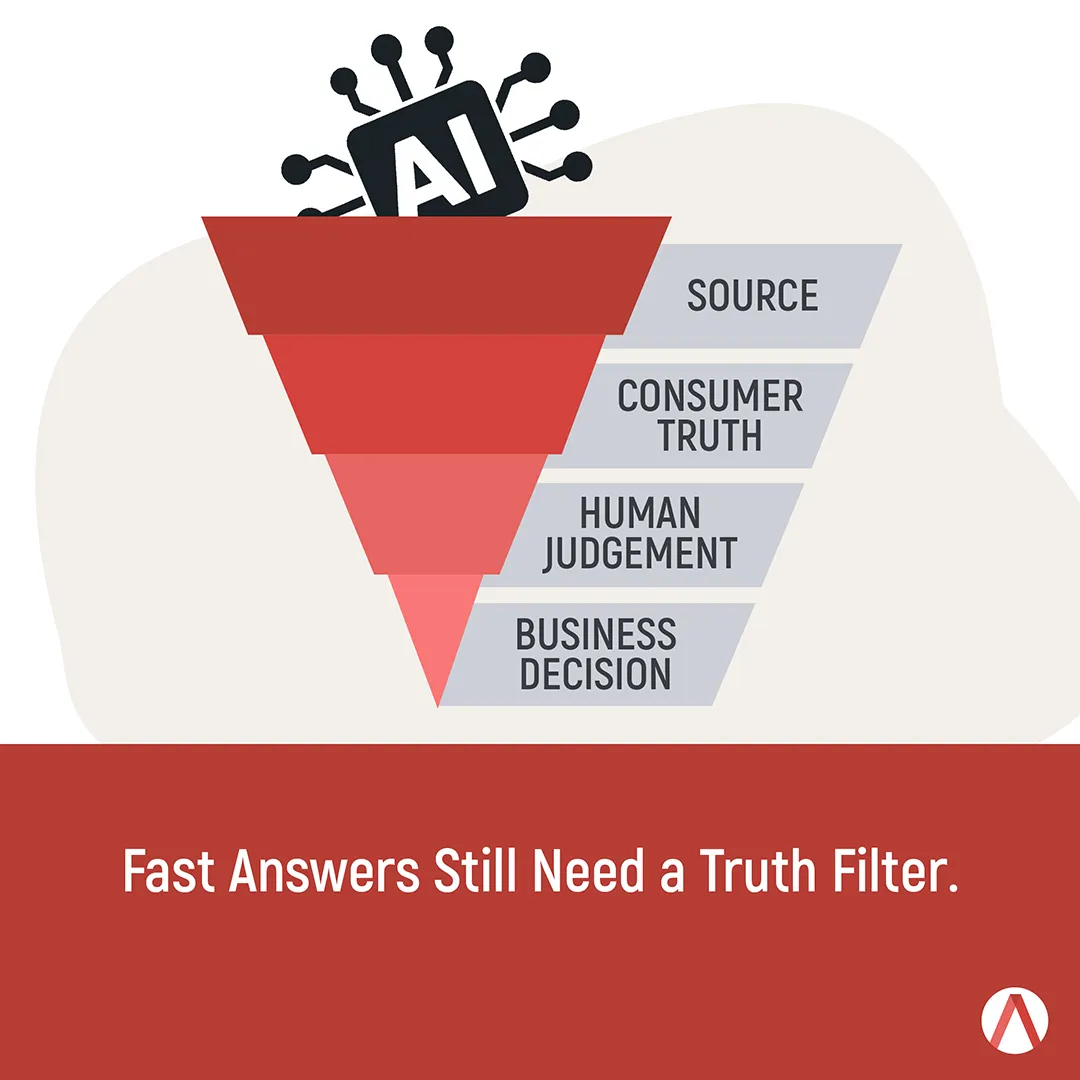
Researchers can increasingly become the orchestration and governance layer, helping marketers ask better questions, select appropriate methodologies, understand what the data actually says, and determine how confident they should be in an answer.
For marketers, that comes with responsibility.
Having access to research does not automatically make someone a researcher, just as having access to AI does not automatically make someone an expert.
The question shifts from, “Can I get an answer?” to, “Do I understand enough about how this answer was created to act on it?”
Your Competitive Advantage Is the Context AI Does Not Have
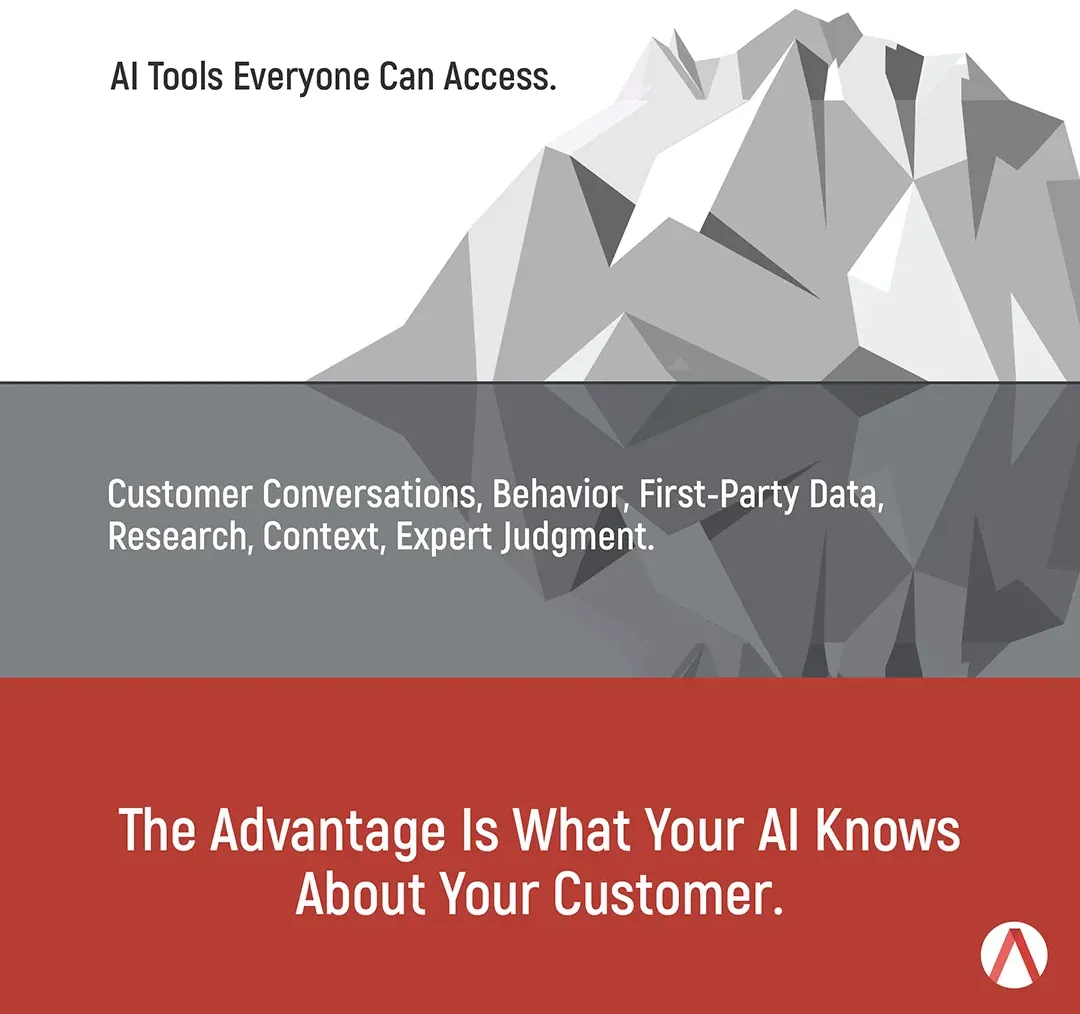
One of Tiffany’s strongest points was that as powerful AI tools become widely available, technology itself becomes less differentiated.
The advantage increasingly sits in what you know.
What motivates your customers? What language resonates? Where do they experience friction? What have you learned from years of conversations and behavioral data? Where does what customers say differ from what they actually do?
Tiffany calls this proprietary human understanding.
You cannot simply ask a generic AI model to manufacture it.
That point becomes even more relevant as consumers themselves become skeptical of AI-generated information. Gartner reported in September 2026 that 57% of surveyed U.S. consumers said the prevalence of AI-generated content had made them less trusting of brand messaging, while 43% said they were relying more on real people for shopping information and recommendations.
The more intelligence becomes commoditized, the more valuable grounded human understanding becomes.
If Everyone Gets 17, Is the Answer Really Unique?
Tiffany shared a simple experiment that captures this beautifully.
Ask your favorite AI tool to pick a random number between 1 and 30.
When Lori tried it during the interview, the answer was 17, exactly as Tiffany predicted.
Her point was not about the number. It was about sameness.
When organizations use similar models to ask similar questions without supplying proprietary context, why should they expect differentiated answers? Or, as Tiffany put it, “If you’re not feeding it context and the appropriate information and you’re just using generic responses, you’re going to get generic answers.”
That should concern every marketing leader because efficiency without proprietary context can simply help an organization arrive at sameness faster.
Plausible Is Not the Same as Trustworthy
This is where validation becomes critical.
Tiffany recommends asking very basic questions of AI-generated insight: Where did this information come from? Who is behind the data? How was the question asked? Can we reproduce the finding? Does it align with what we already know about customers?
Her perspective closely echoes a warning Monika Rogers shared on StrategyCast Episode 521,
“…I think that is embracing AI experimentation, learning, but with an eye towards validation, proof points, understanding so that we can bring that to the organization and people can be confident about what we’re bringing. Because if we don’t do that and we allow fraudulent data to come across, we allow people to make decisions using AI that made up imaginary crap, our credibility is gonna be killed.”

Monika Rogers
That is the operational risk marketers need to recognize.
Tiffany cautions against blindly trusting AI tools without asking where the underlying data comes from or validating the consumer truth behind them.
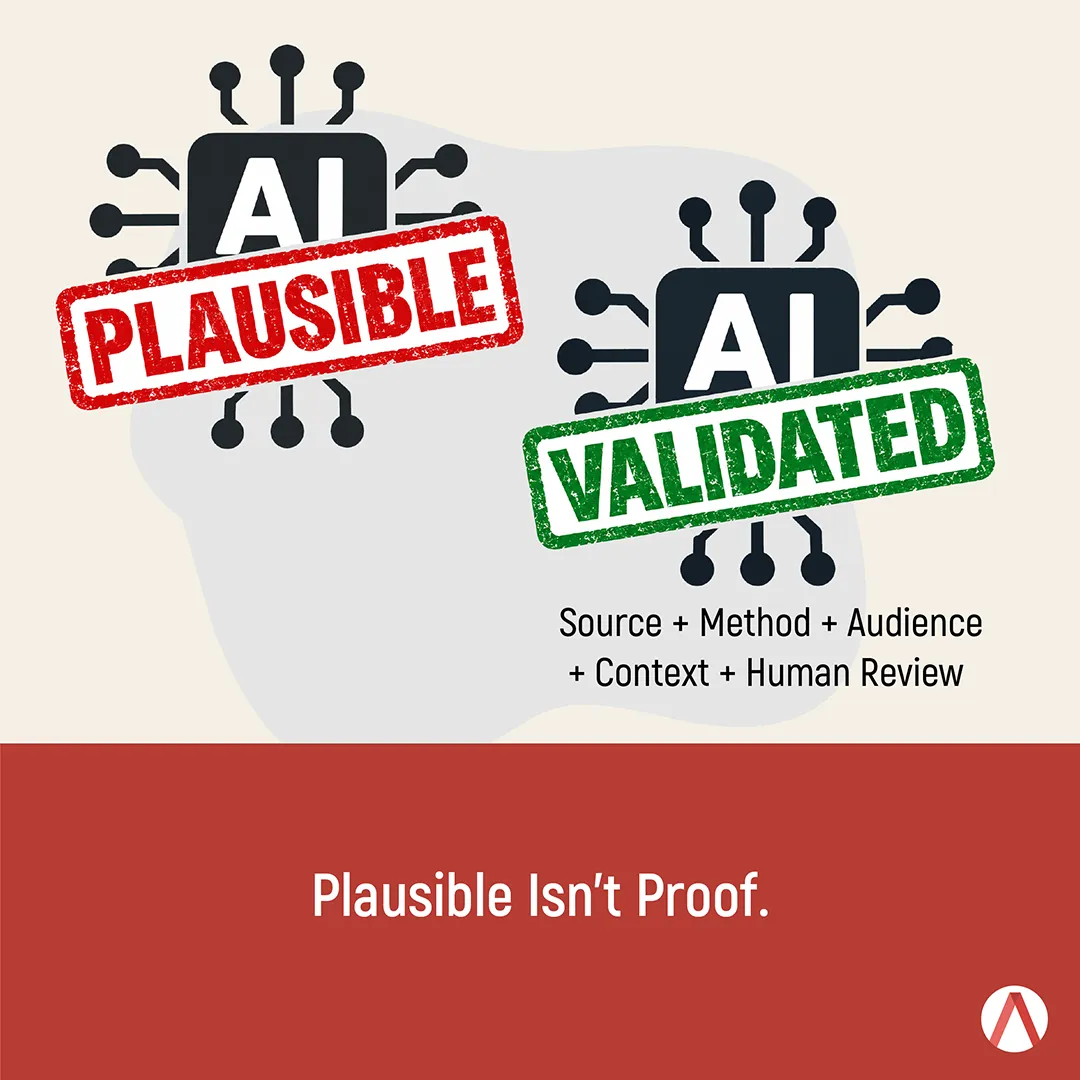
The standard cannot simply be, “Does this sound plausible?”
It has to become, “Am I confident enough in the source, methodology, context, and validation to make a meaningful business decision from it?”
Do Not Turn AI Efficiency Into More Noise
Tiffany’s team is already experiencing extraordinary AI-enabled productivity. Work that once took weeks can sometimes happen in hours. But she offered an important warning, “Just because you can do more with AI doesn’t mean that you always should be doing more.”
That may be one of the most important productivity lessons of this AI era.
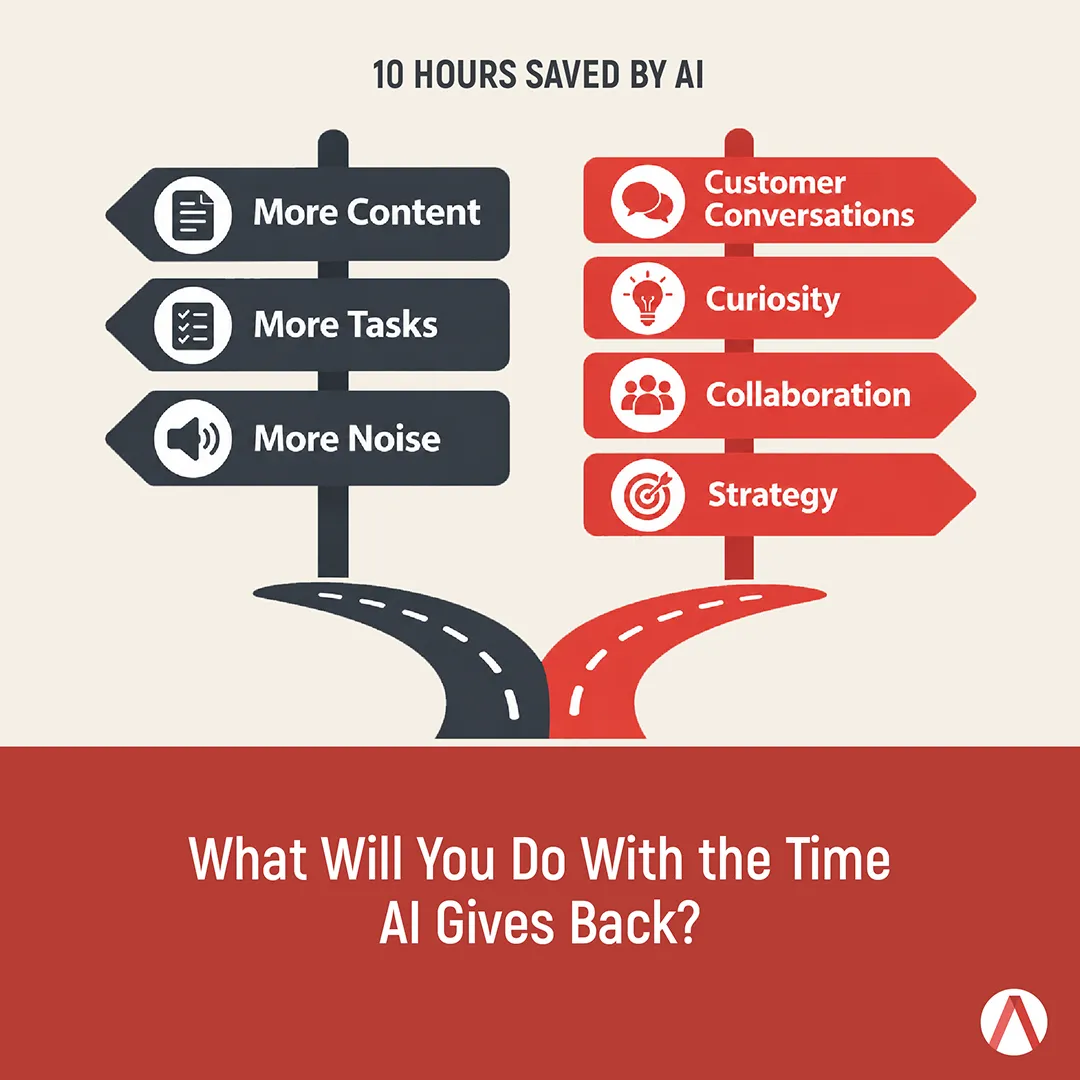
If AI gives a marketing team ten hours back, do we automatically fill those ten hours with another 20 assets?
Or do we reinvest some of that capacity in talking to customers, collaborating with internal teams, questioning assumptions, examining what the data means, and thinking more strategically?
Efficiency should buy us more than output.
It should buy us curiosity.
Redesign the System, Not Just the Task
As leaders plan for the next year, Tiffany recommends thinking beyond individual AI use cases.
Do not simply ask where AI can produce another asset faster.
Look at the entire system.
Where should consumer understanding enter the campaign process? Where should humans validate AI-generated intelligence? What decisions require empathy or expert judgment? Where can repetitive work safely be automated? Who establishes governance?
AI should handle more of the processing.
Humans should become better at questioning, interpreting, connecting, and deciding.
That is a very different model from simply automating yesterday’s workflow.
Questions to Ask Yourself
- Do we know where the data behind our AI-generated insights actually comes from?
- Are we testing consumer truth, or accepting answers because they sound plausible?
- What proprietary customer understanding are we building that competitors cannot easily replicate?
- Where does our AI workflow require human judgment and validation?
- Are AI efficiencies creating better thinking, or simply more output?
- If AI gives our team time back, are we reinvesting some of it in getting closer to customers?
Tiffany left me with a line every leader should carry into the next planning cycle, “Making bad decisions faster is also a bad thing.”
Exactly.
The opportunity in front of marketers is not simply to become faster at generating answers. It is to build organizations that are better at determining which answers deserve to become decisions.
Because in a world where everyone has intelligence on demand, judgment may be the most valuable intelligence of all. If you want to explore these ideas further, I encourage you to listen to my conversation with Tiffany Mullin-Radosevich on StrategyCast Episode 611 where we discuss AI, consumer insights, proprietary human understanding, research governance, validation, productivity, and why better marketing decisions still require human judgment.