
Key Takeaways:
- AI initiatives fail when companies treat them like isolated technology projects instead of business systems.
- Marketing teams have a unique opportunity to lead AI transformation by connecting strategy, operations, and measurable outcomes.
- Governance, orchestration, and cross-functional alignment are now critical components of scalable AI success.
- The future of marketing belongs to operators who can connect data, systems, and business impact.
- AI without human expertise and strategic alignment creates noise, not enterprise value.
What struck me most during my recent StrategyCast conversation with Mark Abramowitz, Chief Marketing Officer at Dataiku, The Platform for AI Success, was how quickly the AI conversation has shifted inside the enterprise. Not long ago, companies were focused on experimentation and efficiency. Today, leadership teams are asking a much bigger question: how does AI actually drive measurable business impact?

Mark Abramowitz
That shift is redefining the role of marketing. No….really, it is.
As Mark expressed throughout our conversation, the organizations seeing real success are not simply adopting more AI tools. They are building systems that connect people, governance, operations, and strategy into a unified approach tied directly to business outcomes.
It also means marketing can no longer operate solely as a campaign engine. Modern marketers must think more like operators, understanding how AI influences every layer of the business, from sales and customer intelligence to orchestration and executive decision-making.
The companies that lead in the next era of AI will not be the loudest. They will be the ones building the clearest systems for growth, alignment, and accountability.

AI Cannot Operate in a Vacuum
One of the biggest misconceptions companies still have about AI is that it can somehow operate independently of business strategy.
It cannot.

Christine Royston
Christine Royston, CMO at Wrike, perfectly reinforces Abramowitz’s argument that marketers must shift into a systems-oriented, business-leader mindset to ensure AI drives real corporate value. She emphasizes that AI cannot function effectively in a vacuum without human expertise steering it toward top-line business goals. StrategyCast Episode #560
As Christine shared with me, “Talk to the finance team, ask them what’s important, talk to the sales team, ask them what’s important so you understand how the different pieces connect to create A strategy.”
That insight gets to the heart of what many organizations are still missing:
- AI is not simply a marketing tool.
- It is not simply an efficiency engine.
- It is not simply a content accelerator.
AI is now an operational layer that touches every department inside the business.
And when organizations fail to align those departments around shared business outcomes, AI initiatives quickly become fragmented experiments that never scale.
Mark’s position on this challenge further reinforced how many organizations are still approaching AI like a traditional technology deployment instead of a business transformation initiative.
The companies seeing real momentum are the ones connecting people, orchestration, and governance into a unified operating model.
Marketing’s New Role: System Builder
This is where marketing’s role is evolving dramatically.
For years, marketers were often viewed as campaign builders, and after sharing the morning in deep conversation with Mark, I’m of the opinion as well that they must become not only systems thinkers, but systems operators.
Mark describes this evolution as moving from campaign execution toward building operational infrastructure that continuously connects brand, demand generation, customer intelligence, and revenue impact.
The implication is significant.
Modern marketing teams are uniquely positioned to lead because they already sit at the intersection of customer insight, data, messaging, and business communication. But succeeding in this environment requires marketers to think differently about their role inside the organization.
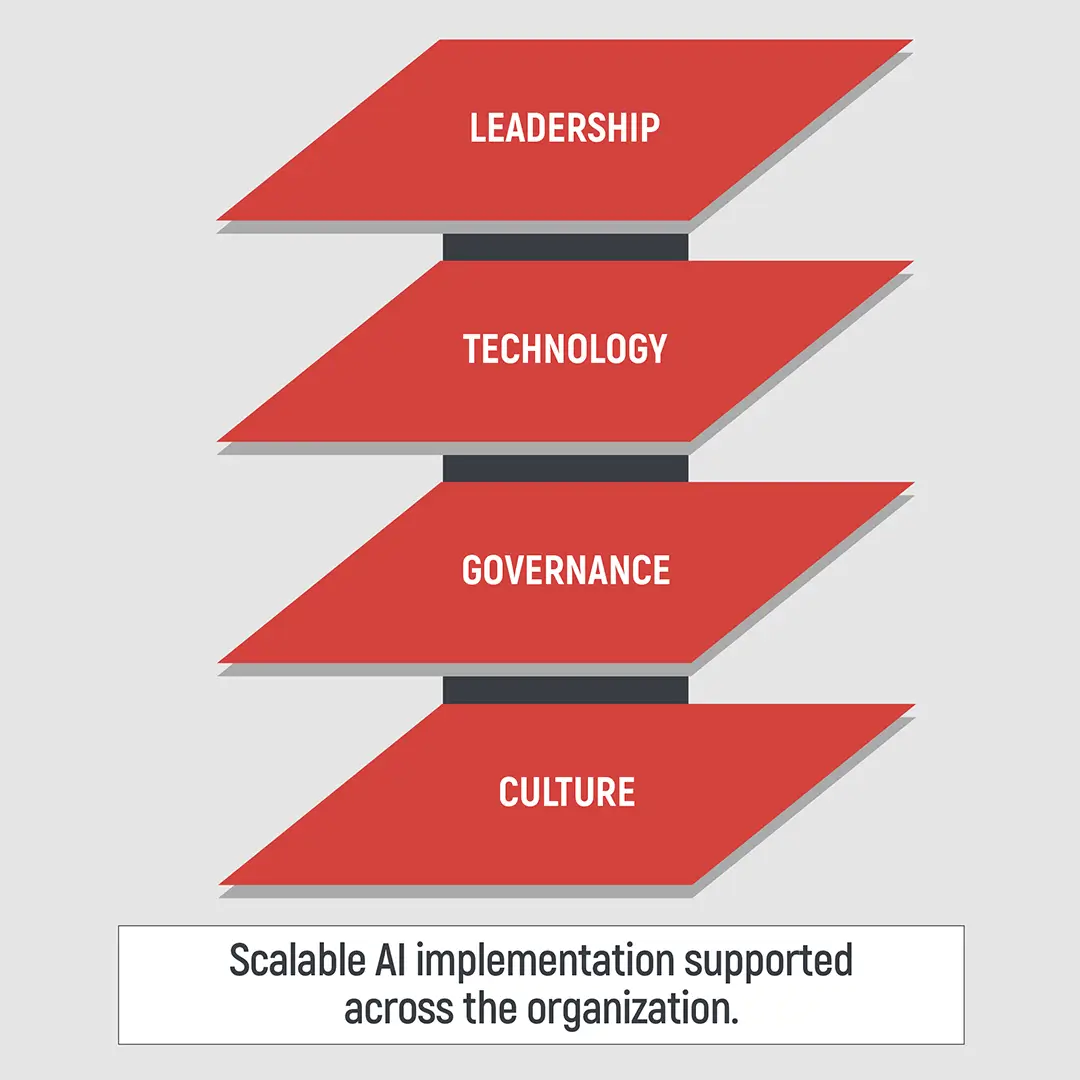
Lara Shackleford, a tenured executive specializing in AI-fueled strategy for enterprise and mid-market companies, directly supports Abramowitz’s core success formula of technical orchestration and robust governance, warning against treating AI as just another flashy tool for experimentation.StrategyCast Episode #487

Lara Shackelford
As she explains, “And there are 4 key aspects of that that we focus on. It’s leadership, technology, governance, and culture.”
That balance matters.
Too many companies are still focused on deploying AI tools without building the operational structure necessary to support them. The result is disconnected systems, inconsistent outputs, duplicated efforts, and growing skepticism across the enterprise.
The Human Layer Still Matters Most
For all the excitement surrounding automation, one truth continues to rise above the noise, and that is that human expertise remains the differentiator.
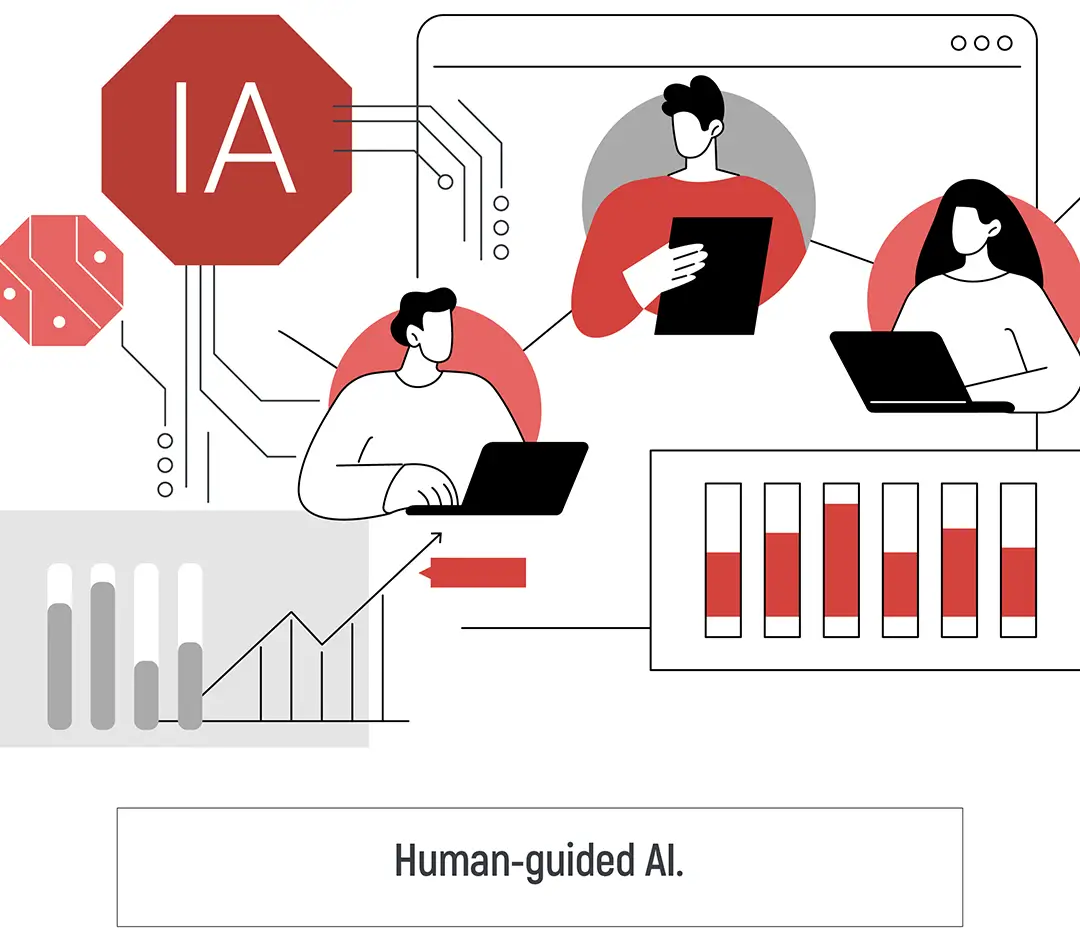
Royston emphasizes this clearly, “There always has to be, you know, the human in the loop. There always has to be AI plus a human who’s… thinking through, you know what, how do we align to the corporate strategy?”
That “human in the loop” concept may be one of the most important competitive differentiators organizations have moving forward.
- AI can process information.
- AI can identify patterns.
- AI can accelerate execution.
But AI cannot independently determine strategic nuance, organizational priorities, or human trust.
That still belongs to leadership.
Global advisory firms are seeing the same pattern. EY argues that AI “isn’t just a tool, it’s a transformative force that demands a systems-level perspective,” and that real value only emerges when leaders redesign how talent, data, and technology work together across the business—exactly the kind of operating-model mindset marketing now has to champion. Check out the article, Systems Thinking to Unlock AI’s Business Value.
And perhaps nowhere is that more critical than in marketing, where messaging, positioning, and credibility directly influence how organizations are perceived in the marketplace.
Moving Beyond Efficiency Toward Strategic Influence
One of the most dangerous traps organizations face right now is limiting AI conversations to productivity gains alone.
Efficiency matters.
But efficiency is not the end goal.
Lara captures this perfectly: “…there’s so much we can do to be more strategic, to move out of using the AI for efficiency, and be a better strategic partner at the table, which is something that marketing… has been crucial for marketing for years.”
That statement reflects the larger transformation happening across the industry.
Marketing leaders now have an opportunity to elevate their influence inside the C-suite by helping organizations connect AI investments to measurable business value.
Not vanity metrics.
Not experimentation for experimentation’s sake.
Real business outcomes.
The organizations that succeed in the next era of AI will not simply be the ones adopting the most tools.
They will be the organizations building the clearest systems.
Questions to Ask Yourself:
- Is your organization treating AI as a disconnected technology project or as a business-wide operational system?
- How aligned are your marketing, sales, finance, and operational teams around shared AI goals?
- Are your AI initiatives focused solely on efficiency or on measurable business impact?
- Where does governance fit into your current AI strategy?
- How are you ensuring human expertise remains central to AI-driven decision-making?
AI is not replacing the need for strategic marketing leadership. If anything, it is increasing it. The future belongs to organizations capable of combining human expertise, operational alignment, and scalable AI systems into a unified business strategy.
And marketers willing to embrace that systems-oriented mindset may become some of the most important business leaders in the enterprise.
If you’d like to dive deeper into this topic, listen to Lori Jones’ conversation with Mark Abramowitz on StrategyCast, where they explore the evolving role of marketing in driving AI success and business transformation.