

For years, marketing has been obsessed with precision. With better targeting, better data, better dashboards.
If you could measure it, optimize it, or automate it, the industry leaned in. Entire strategies were built around performance metrics and incremental gains.
And for a while, that approach delivered results.
But something interesting is happening across the marketing landscape today. After years of perfecting the science of marketing, companies are rediscovering the power of the art. Because when everyone has the same tools, the same data, and the same ability to optimize campaigns, the real differentiator isn’t technology.
It’s the idea.
And that’s why creativity is quietly returning to the center of marketing strategy.
When Everyone Has the Same Tools

One of the most profound shifts in marketing today is that the technological playing field has leveled.
Most organizations now have access to:
- advanced analytics
- marketing automation platforms
- sophisticated targeting tools
- real-time performance dashboards
The capabilities that once created a competitive edge are now widely available. When everyone can optimize campaigns, analyze data, and target audiences with precision, those tools no longer define the winners. What does?
Creative thinking.
Not creativity in the sense of clever headlines or colorful campaigns, but creativity in how companies define their position, tell their story, and shape how customers think about their category.
When Creative Strategy Changes the Conversation
Some of the most successful brands of the past decade didn’t win by optimizing better ads. They won by changing how people thought about their industries.
Consider Liquid Death, a canned water company that built a billion-dollar brand not by competing on hydration, but by marketing itself like a rebellious energy drink brand, complete with heavy-metal-inspired branding and irreverent humor.
Or Duolingo, whose TikTok presence turned its green owl mascot into a cultural phenomenon. Instead of producing conventional marketing content, the brand embraced humor, self-awareness, and bold personality, earning millions of followers and enormous organic reach.
Even in B2B sectors, creativity is reshaping the conversation. Companies that once relied on safe, conventional messaging are beginning to realize that distinctive storytelling and thought leadership drive far greater engagement than predictable corporate language.
These brands didn’t simply promote products. They introduced a point of view.
Why Creativity Is Suddenly Winning Again
Several forces are pushing creativity back to the center of marketing strategy.
First, targeting advantages are shrinking. Privacy changes and evolving digital platforms mean marketers have fewer signals and less precision than they once did.
Second, performance marketing has reached diminishing returns. Many organizations have optimized campaigns as far as they can go. Incremental improvements in targeting or bidding often produce only marginal gains.
Third, audiences are overwhelmed with content. People are exposed to thousands of marketing messages every day. Only the most distinctive ideas break through the noise.
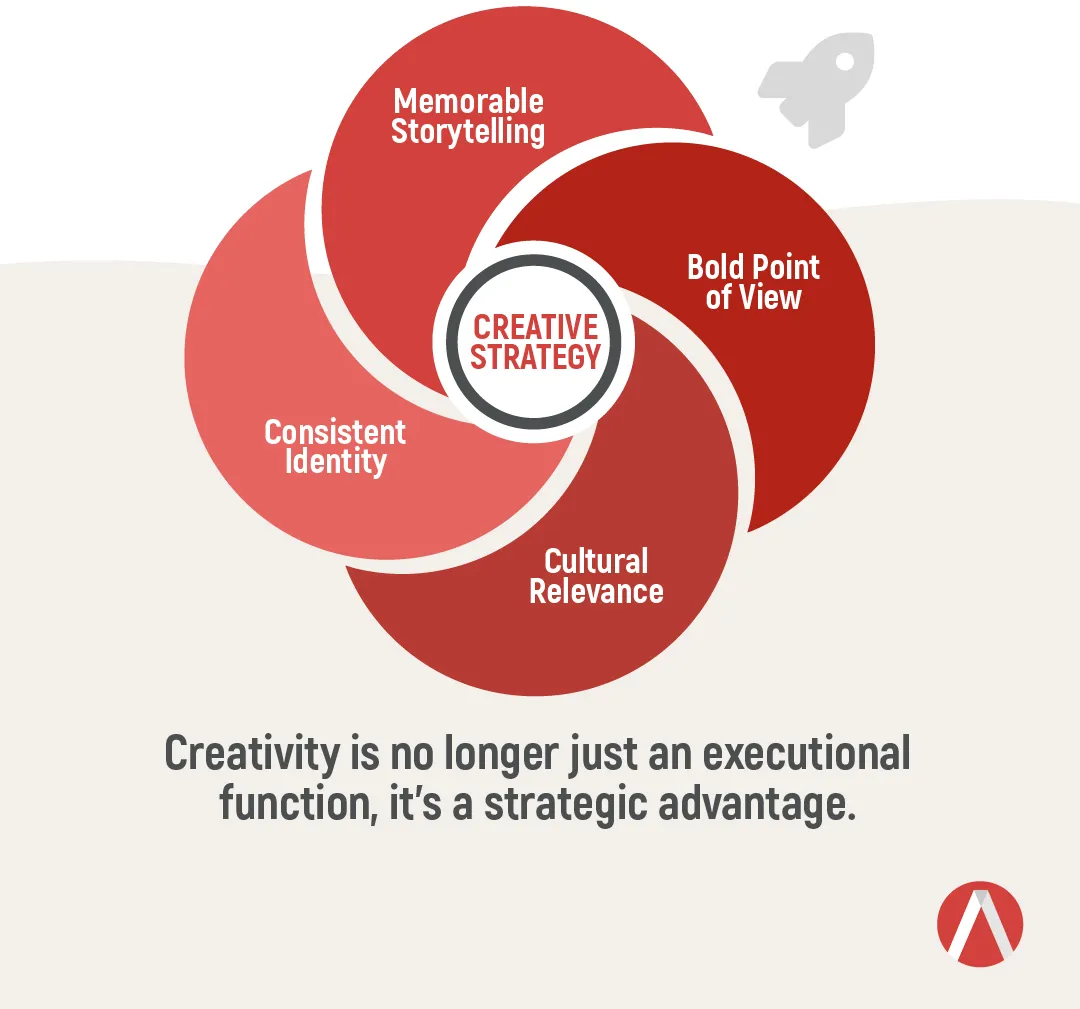
In this environment, creativity becomes more than a marketing function, it becomes a strategic advantage.
The Courage to Be Different
Creative marketing isn’t just about design or messaging. At its core, creativity requires something many organizations struggle with: strategic courage.
It means:
- taking a position
- saying something meaningful
- communicating with clarity
- resisting the temptation to sound like everyone else
This can feel uncomfortable for companies accustomed to playing it safe. But safe marketing rarely creates momentum.
The brands that lead their industries are often the ones willing to challenge expectations, introduce new ideas, and communicate with conviction.
The Opportunity Ahead
As the marketing landscape continues to evolve, companies that invest in creative thinking will find themselves with a powerful advantage.
Technology will continue to advance. Data will continue to expand. But tools alone won’t define the brands that stand out.
What will matter most is how organizations use those tools to tell compelling stories, introduce new perspectives, and connect with audiences in ways that feel meaningful and memorable.
In a world where everyone can optimize campaigns, the real differentiator is imagination.