
“People want technology to be convenient, but they also want to trust that when they engage with a company, it’s authentic.” John Golden
Key Takeaways
- Trust has become a defining competitive advantage in an AI-driven marketplace.
- AI should elevate human expertise and relationships, not replace them.
- Transparency and consistency are essential to building lasting credibility.
- Trust is created across an entire revenue network, not through a single marketing interaction.
- The organizations that combine intelligent technology with human judgment will be positioned for sustainable growth.
One of the greatest privileges of hosting StrategyCast is the opportunity to spend time with leaders whose perspectives challenge conventional thinking. Some conversations leave you with a practical takeaway. Others fundamentally reshape how you think about leadership, marketing, and growth.
My recent conversation with John Golden, Chief Strategy and Marketing Officer at Coevera, was exactly that kind of discussion.

John Golden
I was especially excited to speak with John because his perspective is grounded in decades of experience navigating technological disruption, economic uncertainty, and rapidly changing buyer behavior. He has lived through the dot-com boom and bust, the financial crisis, COVID, and now the unprecedented acceleration of artificial intelligence.
Yet throughout our conversation, one theme consistently rose above every discussion surrounding AI, automation, data, and marketing efficiency.
Trust.
John reminded me that while technology continues to evolve at breathtaking speed, the foundation of every meaningful business relationship has remained remarkably consistent. People still buy from organizations they believe, and they remain loyal to brands they trust.

AI Is Not Replacing Relationships. It Is Making Them More Valuable.
Artificial intelligence has become one of the most transformative technologies marketers have ever encountered. It is helping organizations produce content faster, uncover deeper insights, personalize customer experiences, and automate repetitive work.
Those capabilities are extraordinary, but somewhere along the way many organizations began asking the wrong question. Instead of asking, “How can AI help our people create more value?” they began asking, “How many people can AI replace?”
While that mindset may create short-term efficiency, it rarely creates the kind of loyalty that fuels long-term growth.
John offered one of the most practical observations from our conversation:
“The first thing you should do is look at how AI can take away the mundane, the rote, the routine work, the lower-value stuff, and allow your people to start doing higher-value activities. The relationship building and the kind of things that only humans can do.”
Technology excels at processing information, but people create confidence, and confidence is ultimately what drives buying decisions.
This idea is supported by emerging research as well. Deloitte’s 2026 Global Human Capital Trends research found that organizations taking a technology-first approach to AI were 1.6 times more likely to fall short of expected returns than organizations prioritizing a human-centric approach. Deloitte concluded that competitive advantage increasingly comes from cultivating the human edge, including judgment, creativity, adaptability, and the ability to build trust.
Trust Is Earned Through Transparency
Consumers have become remarkably sophisticated. They know AI is being used, so the question is no longer whether organizations leverage artificial intelligence. The question is whether customers trust how it is being used.
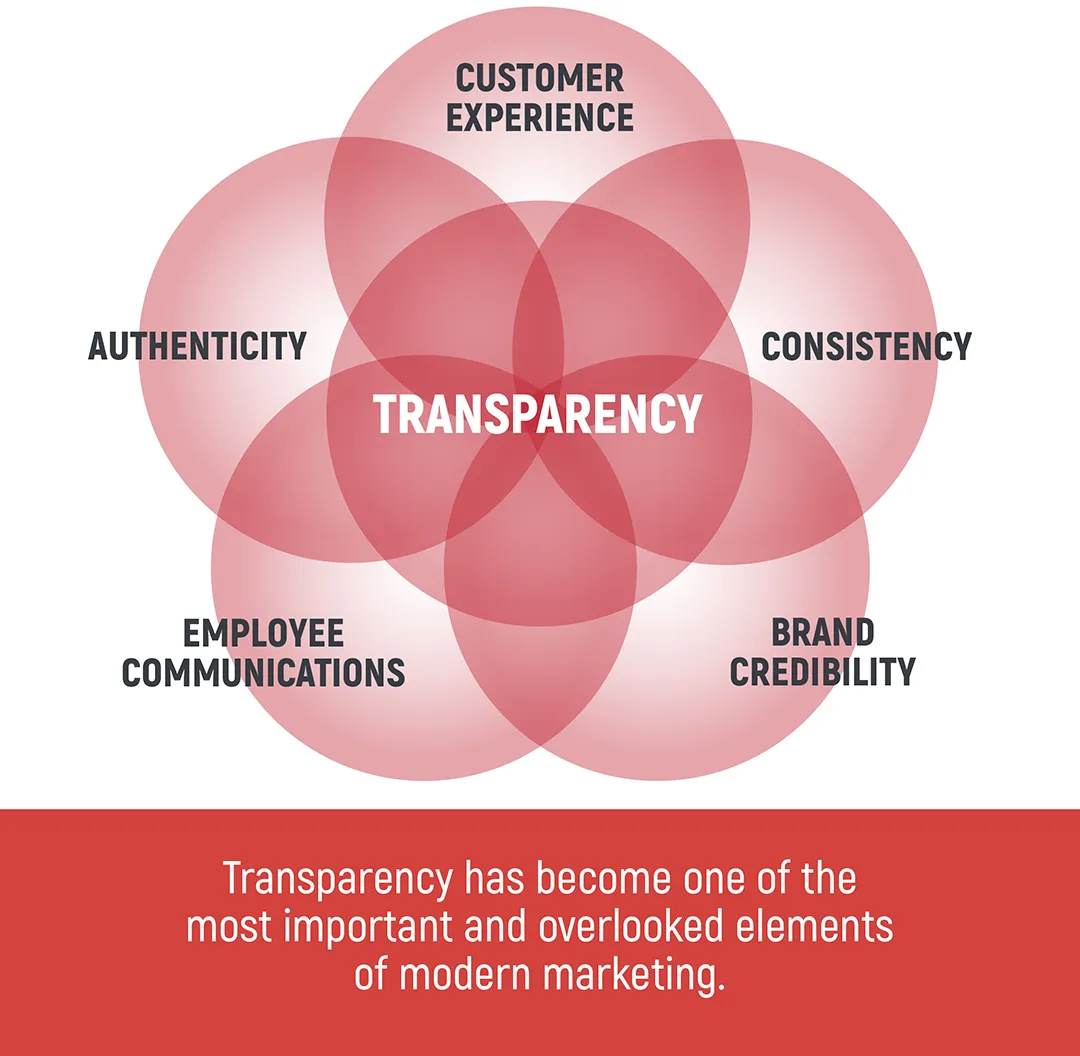
Transparency has therefore become one of the most important and overlooked elements of modern marketing.
John made a particularly important point during our discussion: organizations should tell people when they are interacting with AI rather than allowing them to discover it later. When technology is useful, transparent, and supported by real people, customers are far more likely to embrace it.
Customers do not expect perfection. They expect honesty, and that honesty extends well beyond marketing campaigns into customer service, sales conversations, leadership communication, and every other interaction someone has with your brand.
Consistent experiences build credibility, credibility strengthens trust, and over time trust becomes one of the most powerful drivers of sustainable business growth.
Great Brands Do Not Simply Adopt AI. They Humanize It.
Last week, while reflecting on my conversation with Scott Goodson on StrategyCast Episode 601 we explored how the strongest brands build movements by inspiring people around shared beliefs rather than simply broadcasting messages.
As Scott elegantly explained, modern marketing is no longer about interrupting people to buy their attention. It is about creating a movement around a cultural belief people already share.
That idea provides an important bridge to John’s perspective.
Belief may capture someone’s attention.
Trust earns their business.
A movement can bring people toward a brand, but the brand’s daily actions determine whether those people stay. Purpose cannot simply live in an annual report or on a conference room wall. It must become a lived North Star that shapes how technology is used, how employees behave, and how customers are treated.
AI can accelerate research, improve efficiency, and organize ideas, but it cannot replace decades of experience, replicate wisdom earned through difficult decisions, or manufacture the authenticity customers instinctively recognize.
Revenue Lives in a Network of Trust
One of the most compelling ideas John shared was his concept of the revenue network.
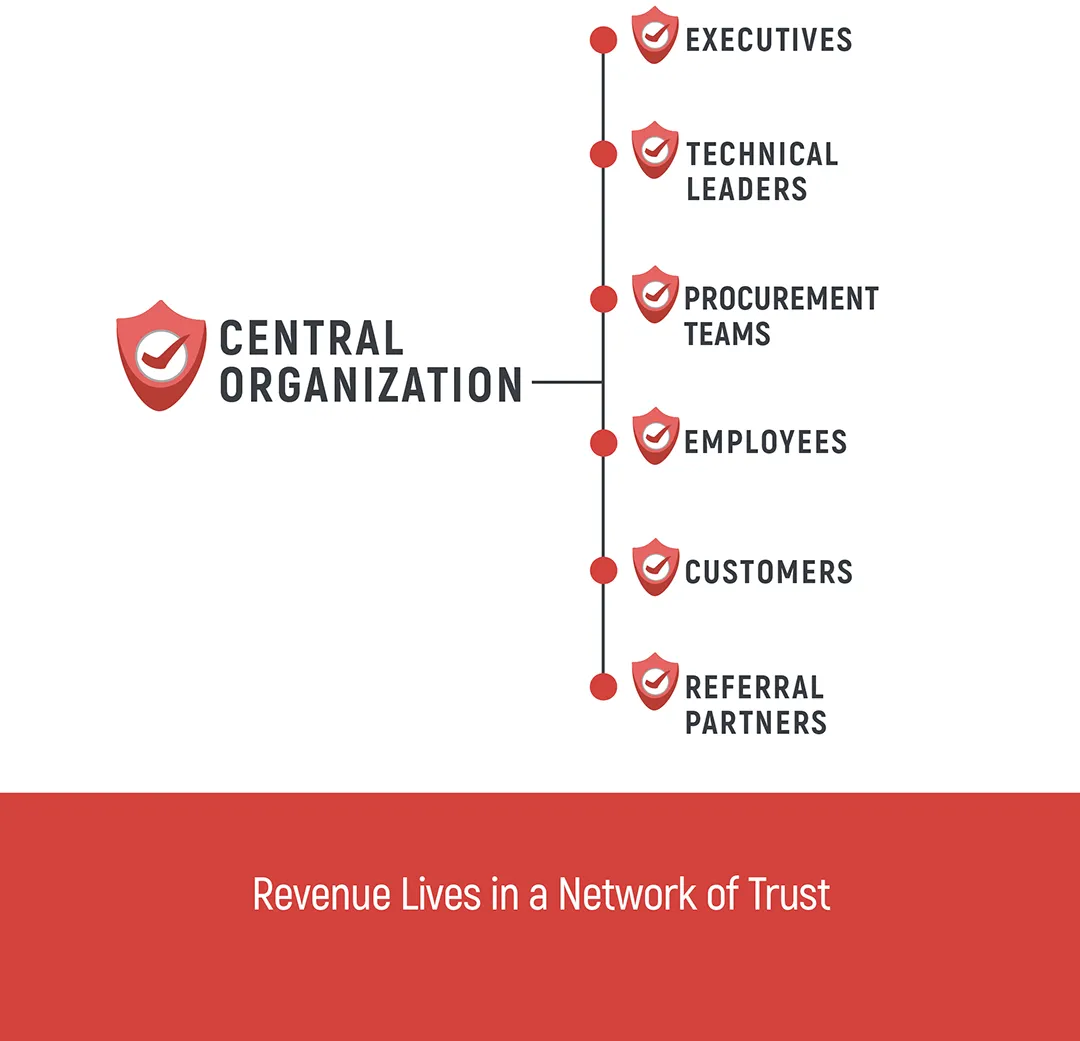
In B2B marketing, buying decisions are rarely made by one person. They are influenced by executives, technical leaders, procurement teams, internal champions, consultants, existing customers, and referral partners.
Revenue does not simply live inside one record in a CRM. As John described it, revenue is a living, breathing network shared among people.
That reality should change the way marketers think about growth.
Each stakeholder may need a different message, level of proof, and reason to trust the organization. A CEO may care about strategic value, while a technical leader wants clarity around integration and risk. Procurement may prioritize consistency and accountability.
AI can help marketers understand and respond to these different perspectives, but strategy must come first. Personalization without insight is simply more noise.
Your Culture Is Your First Trust Strategy
Another insight from John resonated deeply with me.
Many organizations spend enormous energy perfecting external messaging while overlooking internal alignment. Employees cannot consistently communicate what they do not fully understand.
Building trust begins inside the organization by ensuring every employee understands not only what the company does, but why it matters and how their role contributes to delivering that promise every day.
John shared an example from his own leadership experience. After completing an annual strategic planning process, he challenged the senior team to reduce the entire strategy to one page. That page was laminated and distributed throughout the organization so employees could see how their daily work connected to the company’s larger vision.
That kind of clarity matters because every customer interaction shapes the brand.
A brilliant campaign cannot compensate for a confusing sales conversation. A polished website cannot overcome an inconsistent customer service experience. Trust can be strengthened or damaged at every touchpoint.
Your brand is not simply what your marketing department publishes.
It is what your entire organization consistently delivers.
The Human Edge
As AI continues reshaping every aspect of business, one reality is becoming increasingly clear: the organizations generating the greatest long-term growth will not necessarily be those with the most sophisticated technology. They will be the ones that use technology to amplify what makes them unmistakably human.
John captured this beautifully near the conclusion of our conversation:
“I think the competitive differentiator is smart use of AI tools by smart people.” – John Golden
I could not agree more.
In a marketplace where content is becoming abundant, authenticity is becoming increasingly scarce, and scarcity creates value. Trust is no longer simply one component of your brand. It is rapidly becoming the foundation upon which your brand is built.
The leaders preparing for 2027 should not simply be asking how quickly their organizations can adopt AI. They should be asking how technology can help their people listen more carefully, communicate more clearly, deliver greater value, and create stronger relationships.
Technology may help you move faster.
Trust determines whether people will follow.

Questions to Ask Yourself
- Is your AI strategy strengthening trust or simply improving efficiency?
- Are you transparent about when and how your organization uses AI?
- Do your employees understand and consistently deliver your brand promise?
- Are you using technology to replace relationships or deepen them?
- What could your organization do today to become the most trusted brand in your market?
If you would like to explore these ideas further, I encourage you to listen to my conversation with John Golden, where we discuss trust, AI, revenue networks, internal alignment, and why authentic human relationships remain the ultimate competitive advantage in modern marketing.