

Key Takeaways:
- The real barrier to marketing performance isn’t tools, it’s the architecture beneath them.
- The “ambition gap” explains why bold strategies fail to translate into execution.
- Identity resolution is the foundation of any scalable marketing effort.
- Latency, governance, and activation determine whether AI and personalization actually work.
- Treating Martech as a shopping list leads to complexity, not capability.
The Illusion of Progress
As I was preparing for my conversation with Steve Chitwood, SVP, Interactive Strategy and Consulting for the Americas with HGS, I found myself reflecting on a pattern I’ve been seeing play out across so many organizations right now.

Steve Chitwood
It’s subtle at first. But once you see it, you can’t unsee it.
Because I’ve sat in enough pipeline reviews to recognize it almost immediately.
The dashboards look strong. The tech stack is extensive. The team is capable, experienced, and moving fast.
And yet, something feels off.
Personalization feels inconsistent. Campaigns take longer than they should. AI shows promise in controlled environments but struggles to scale. Teams begin working around their systems instead of through them.
As Steve and I dug into it, one thing became clear. This isn’t a talent issue. It isn’t even a strategy issue.
It raises a harder question. If everything looks right on the surface, why are results lagging?
The answer isn’t in the tools.
It’s in the architecture.
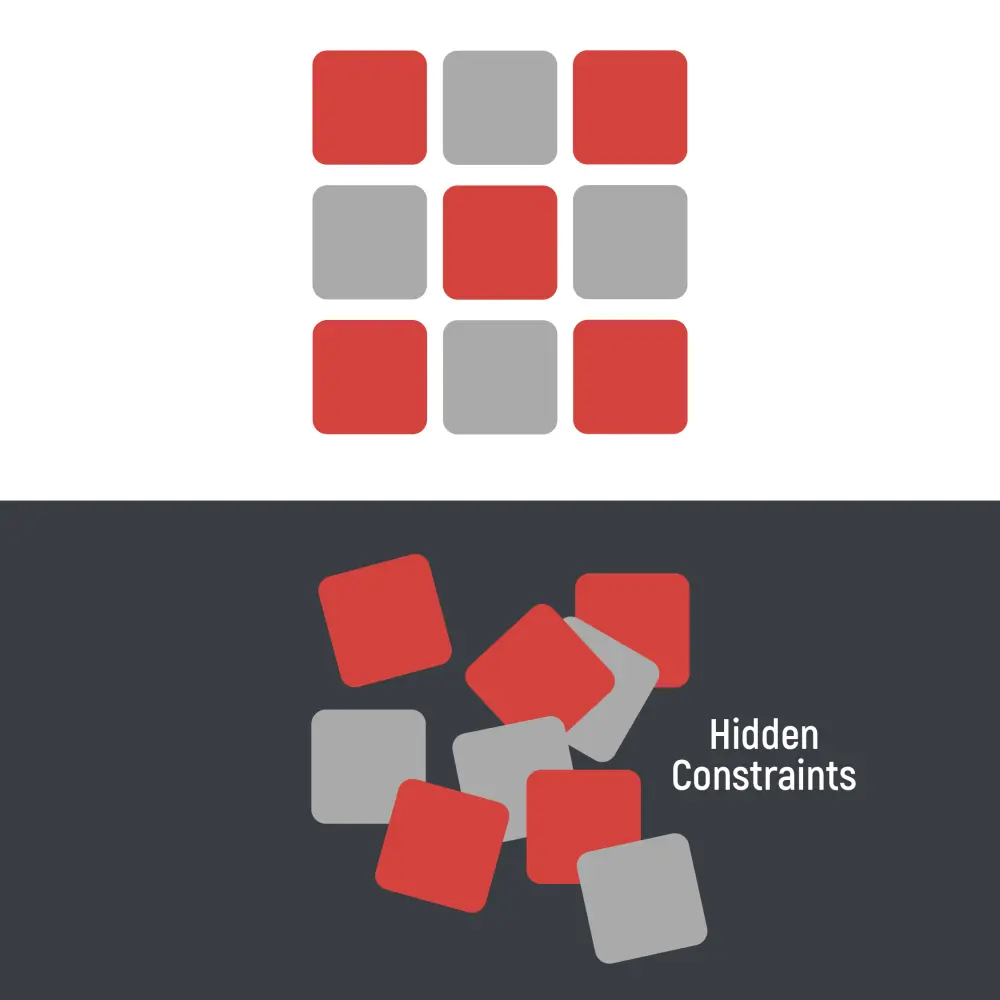
The Ambition Gap No One Is Addressing
There is a growing disconnect inside modern marketing organizations. Leaders believe they have enabled advanced capabilities, but their systems tell a different story.
This is the ambition gap.
On one side, the vision is clear: Omnichannel personalization, Real-time engagement, AI-driven decisioning.
On the other side, reality looks different: Campaigns delayed by operational friction, Data that arrives too late to act on, AI that performs well in theory but struggles in production.
Jessica Kao, B2B GTM Transformation Advisor Director, Adobe, captures this breakdown with precision when she explains that the issue is not ambition, it is what sits underneath it, “…that actually has to do with the data strategy that’s exactly behind all of it, right? And so if agents are all on different platforms, do you know what a nightmare it is… think about like 10 different AI agents speaking 10 different languages… Do you think anyone understands what is happening?” StrategyCast (Episode #540)

Jessica Kao
I tend to believe that the issue is not a lack of strategy or even a lack of investment.
It is that the underlying architecture was never designed to support that level of ambition.

Identity Is Where It All Begins
Every marketing strategy starts with a simple premise. You know who your customer is and the problem you’re solving for them. It sounds obvious. Foundational, even. But in practice, that premise breaks down faster than most teams realize.
Customers exist across systems with different identifiers, different data points, and often entirely different definitions depending on the business unit or channel. What should be a single, unified profile becomes fragmented. And the consequences show up immediately. Personalization becomes inconsistent. Suppression fails. Messaging conflicts across channels.
Tracy Hernandez , Founder, CEO and Executive Coach sees this play out across organizations every day:“Most startups have a martech stack that has over 23 products in it… half the systems have overlapping functions.” StrategyCast (Episode #509)

Tracy Hernandez
The result is not more capability. It’s just more confusion.
Tracy goes further, highlighting the real challenge: “Because they’re all separated out… now you’ve got disparate data… we’ve gotta find a way to unify… where is the information, how do I get that information to marry up.”
Because if you do not have a unified view of the customer, everything else is compromised.
Insert a graphic here illustrating fragmented customer data points merging into a single unified profile. Creative direction: multiple identities converging into one “golden record.”
Latency, The Silent Performance Killer
Even when identity is addressed, another issue quietly undermines performance.
Latency.
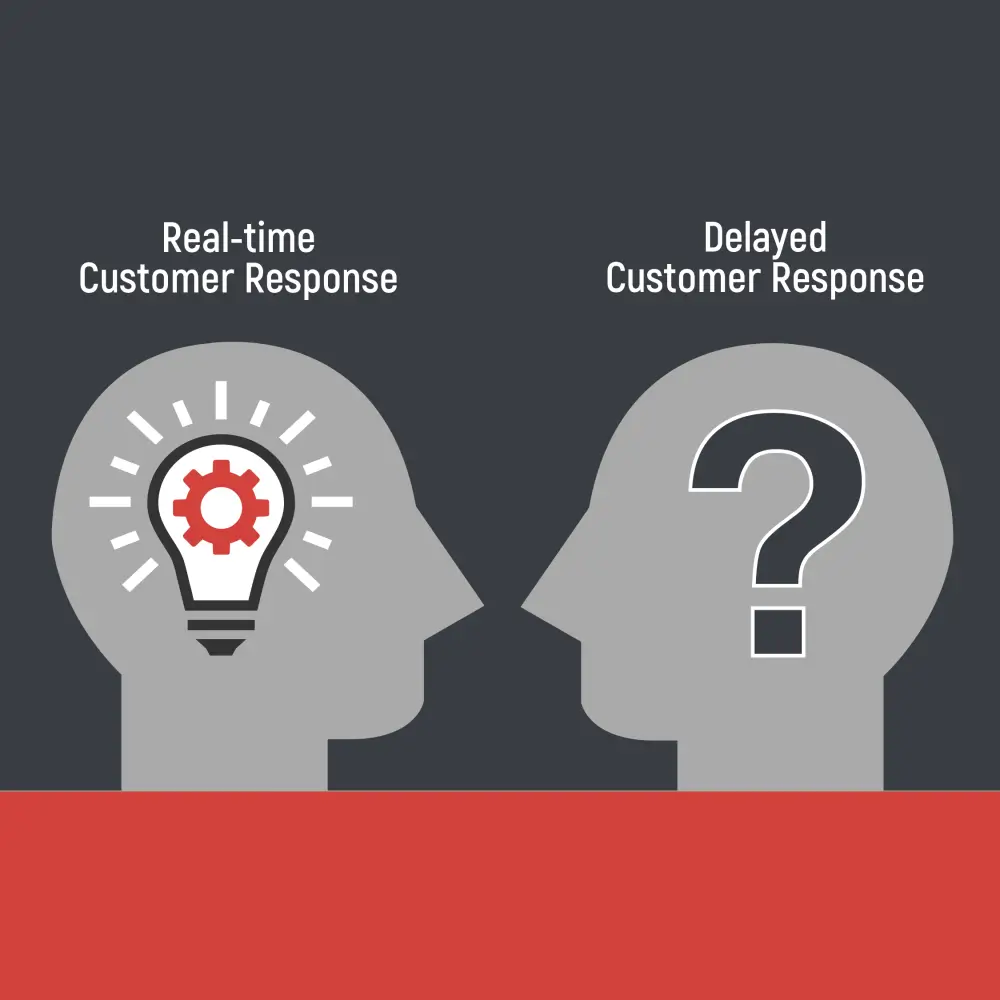
If your systems take hours or days to process customer signals, you are no longer responding to the customer in real time. You are reacting to outdated information.
That is how organizations end up promoting products that have already been purchased or missing key engagement moments entirely.
And when that happens, AI does not fail because the model is wrong. It fails because the inputs are late or incomplete.
Relevance disappears. Trust follows.
From Governance to Activation: Where Strategy Becomes Reality
Governance has a reputation problem.
In many organizations, it is seen as a blocker. A layer of approvals that slows execution and creates friction. But when governance is embedded into the architecture, it does the opposite. It becomes an enabler of speed.
Clear rules around data usage, consent, and decisioning remove uncertainty. Teams are no longer renegotiating risk every time they launch a campaign or test a model. They move faster because the guardrails are already in place. Speed does not come from removing structure. It comes from building it into the system.
And that structure is what makes true activation possible.
Because this is where strategy either translates into impact or breaks down completely.
In many organizations, decision-making is fragmented. Email operates on one set of rules. Paid media on another. Digital experiences on something entirely different. The result is inconsistency, and customers feel it. The brand experience shifts depending on where they engage.
Jessica reinforces how quickly this fragmentation compounds: “…you go buy 28 different tools, guess what, you’ve just exponentially created 20 more silos.”
More tools do not create better decisions. They create disconnected ones.
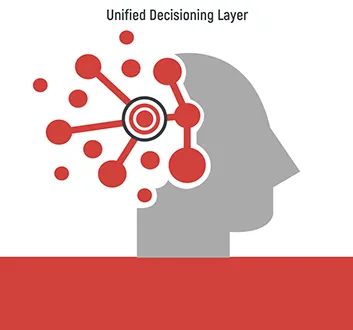
True activation requires a unified approach. Decisioning must be centralized and orchestrated across channels so every interaction reflects a shared understanding of the customer, delivered with speed, consistency, and confidence.
Rethinking the Foundation
For years, marketing has treated technology like a checklist.
There is a gap. Add a tool. Performance slows. Add another platform.
But more tools do not solve structural problems. They amplify them.
The shift is simple. Stop asking what to buy next. Start asking what your architecture can actually support.
Because when the foundation is right, everything else works. Tools perform. Data becomes actionable. AI scales. Strategy executes.
And this is where I find myself coming back to something much more fundamental.
I lead an agency that my father started nearly 46 years ago. Long before Martech stacks, AI models, or real-time personalization were even part of the conversation. And while the tools have changed dramatically, the core principle has not.
Smart execution has always been built on a strong foundation.
Back then, it was about understanding your audience, aligning your message, and ensuring every piece worked together with intention. Today, that same discipline applies. Only now, the foundation includes data, systems, and architecture.
Different tools. Same truth.
That’s exactly why my conversation with Steve Chitwood mattered.
Because what he brings to the table is a clear, practical lens on how modern organizations can reconnect with that foundational thinking. Not by adding more complexity, but by building systems that actually support the strategy they’re trying to execute.
If this is a challenge you’re navigating, I highly recommend listening to the full StrategyCast conversation with Steve Chitwood here. We go much deeper into how to close the ambition gap, rethink your architecture, and unlock the performance your current investments should already be delivering.